MarriageToxin Review: A Refreshingly Sincere Take on Anime Romance.
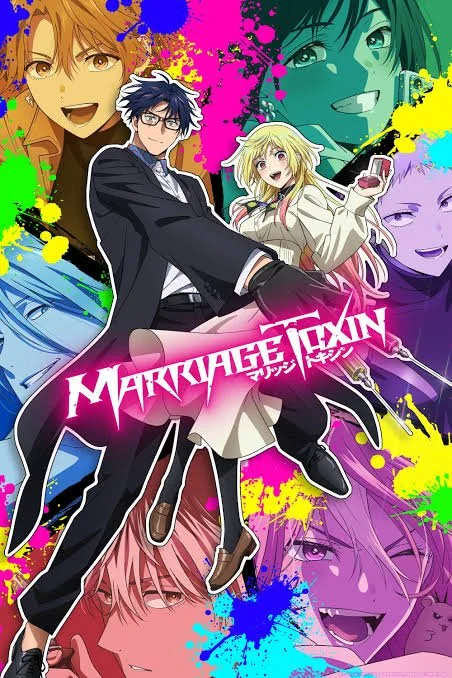
MarriageToxin, based on the web manga of the same name by Joumyaku, is a romantic comedy anime that premiered on April 7, 2026, and ran for 13 episodes. It’s an incredibly charming series that blends romance, comedy, and surprisingly thrilling action, all brought to life with excellent animation. Then again, with Studio Bones behind the project, I probably shouldn’t have expected anything less.
The story follows Hikaru Gero, a young man from a clan of poison-wielding assassins, who sets out to find a wife and produce an heir so his younger sister won't be forced into an arranged marriage and pressured to bear a child against her will. While the premise may sound simple, it lays the foundation for a hilarious, heartfelt, and surprisingly adventurous journey.
No discussion of MarriageToxin would be complete without its other lead, Mei Kinosaki. A cross-dressing marriage swindler, Mei is initially introduced as one of Gero's assassination targets. However, the two quickly become unlikely allies, with Mei taking on the role of Gero's dating coach and teaching him how to navigate romance and connect with women.

I'm not going to break down the entire story because I'd rather you experience it for yourself. Instead, I'll focus on what I enjoyed most about the season, as well as the few things that didn't quite work for me.
One of MarriageToxin's biggest strengths is how it subverts familiar anime tropes. Gero, for example, isn't your typical overconfident or macho protagonist, and that's a big part of what makes him so refreshing to watch.
He's kind-hearted, charming in his own quirky way, and, most importantly, genuinely respectful toward the women he meets and hopes to court. Rather than giving viewers another overpowered protagonist who effortlessly builds a growing harem, MarriageToxin tells a far more grounded story about love, relationships, and personal growth.
What I appreciated most, however, is how the series refuses to treat its female cast as trophies. In many anime, helping a girl almost guarantees she'll fall for the protagonist and become another permanent addition to his circle. Here, that's rarely the case. Gero helps people because it's the right thing to do, not because he's expecting affection in return.
Once their conflicts are resolved, these women continue living their own lives, pursuing their own ambitions, and only keeping in touch with Gero when it feels natural. They have agency beyond the protagonist, making every relationship feel more authentic and every interaction more meaningful. It's a refreshing approach that helps MarriageToxin stand out from many of its contemporaries.

Before wrapping up, I also want to mention the series' approach to queer representation through Mei Kinosaki. Cross-dressing characters in anime are often reduced to running jokes or defined almost entirely by that single trait. MarriageToxin takes a different approach. Kinosaki's identity is never treated as the punchline. It's simply accepted as part of who he is, allowing his personality, intelligence, and relationships to take center stage.
What I appreciated even more was Gero's response. He never mocks, belittles, or judges Kinosaki. He accepts him without hesitation, and their friendship grows through mutual trust and respect rather than prejudice or cheap comedy. It's a subtle but meaningful choice that reflects the compassion at the heart of the series.
Gero may not be a perfect protagonist. His upbringing as an assassin has left him with flaws and a violent past that he continues to wrestle with. Yet despite all of that, he consistently chooses kindness, empathy, and self-improvement. In a genre often filled with protagonists who gain strength through power alone, Gero reminds us that true growth comes from learning to understand and care for others. That's what ultimately makes MarriageToxin such an easy series to recommend.