The Odyssey Movie Review: Christopher Nolan’s Most Ambitious Film Yet.
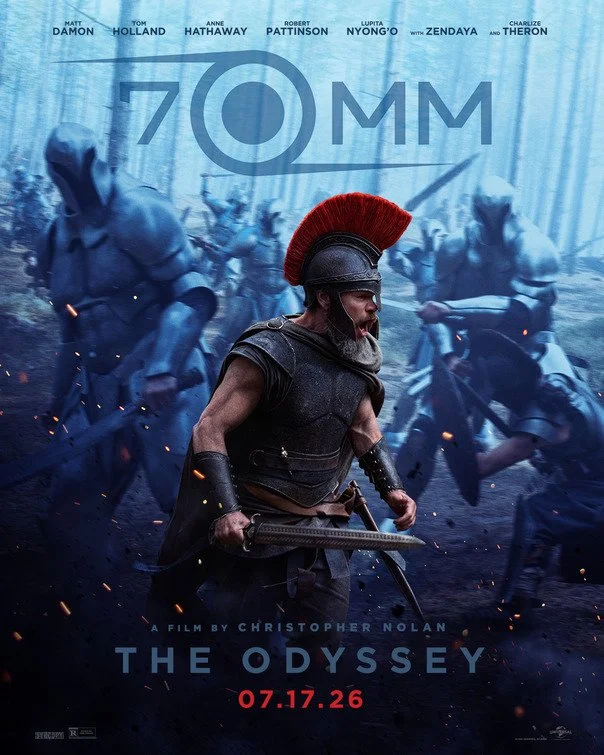
2026 has been nothing short of an incredible year for film and television, with movies like Obsession, Backrooms, and Project Hail Mary, along with TV series such as House of the Dragon, Silo, and From, all making a return. It has been three years since Christopher Nolan last gave audiences something to chew on, and his latest creation, The Odyssey, is easily his most epic film yet. The excitement I felt leading up to this release is difficult to put into words.
The Odyssey is Christopher Nolan's adaptation of the epic poem traditionally attributed to Homer. It follows Odysseus, the Greek king of Ithaca, as he attempts to make his way home after the Trojan War. With a stacked cast that includes Matt Damon, Anne Hathaway, Tom Holland, Elliot Page, Himesh Patel, Robert Pattinson, and many more, the film had a lot to prove. In my opinion, it delivers. It is an exceptionally crafted production, shot entirely with IMAX cameras.
There's a reason The Odyssey has been one of the most talked-about films of the year. Adapting a story that has endured for thousands of years is no small task, especially when audiences expect both faithfulness to the source material and something fresh enough to justify its existence. With Christopher Nolan at the helm, those expectations were only amplified. The question, then, isn't whether The Odyssey is ambitious. It's whether that ambition translates into a film worthy of its legendary source material. Fortunately, the answer isn't a simple one.
As popular and influential as the source material is, it's safe to assume that many people haven't read it or may not even be familiar with it. Because of that, I'm not going to dive too deeply into the story itself. That said, I do think there are a few key concepts worth understanding before stepping into the theatre. One of the most important is Xenia, often referred to as Zeus' Law. In ancient Greek culture, Xenia was the sacred code of hospitality, requiring hosts and guests to treat one another with respect, generosity, and honour. It's a principle that sits at the heart of The Odyssey and plays a significant role throughout the film.
Without giving too much away, many of the story's most important conflicts stem from characters choosing to uphold or violate that code. Understanding Xenia not only gives those decisions greater emotional weight, but also provides the moral framework through which many of the film's consequences are understood. Actions aren't simply judged as right or wrong because the story says they are; they're measured against a code that the characters themselves are expected to honour.
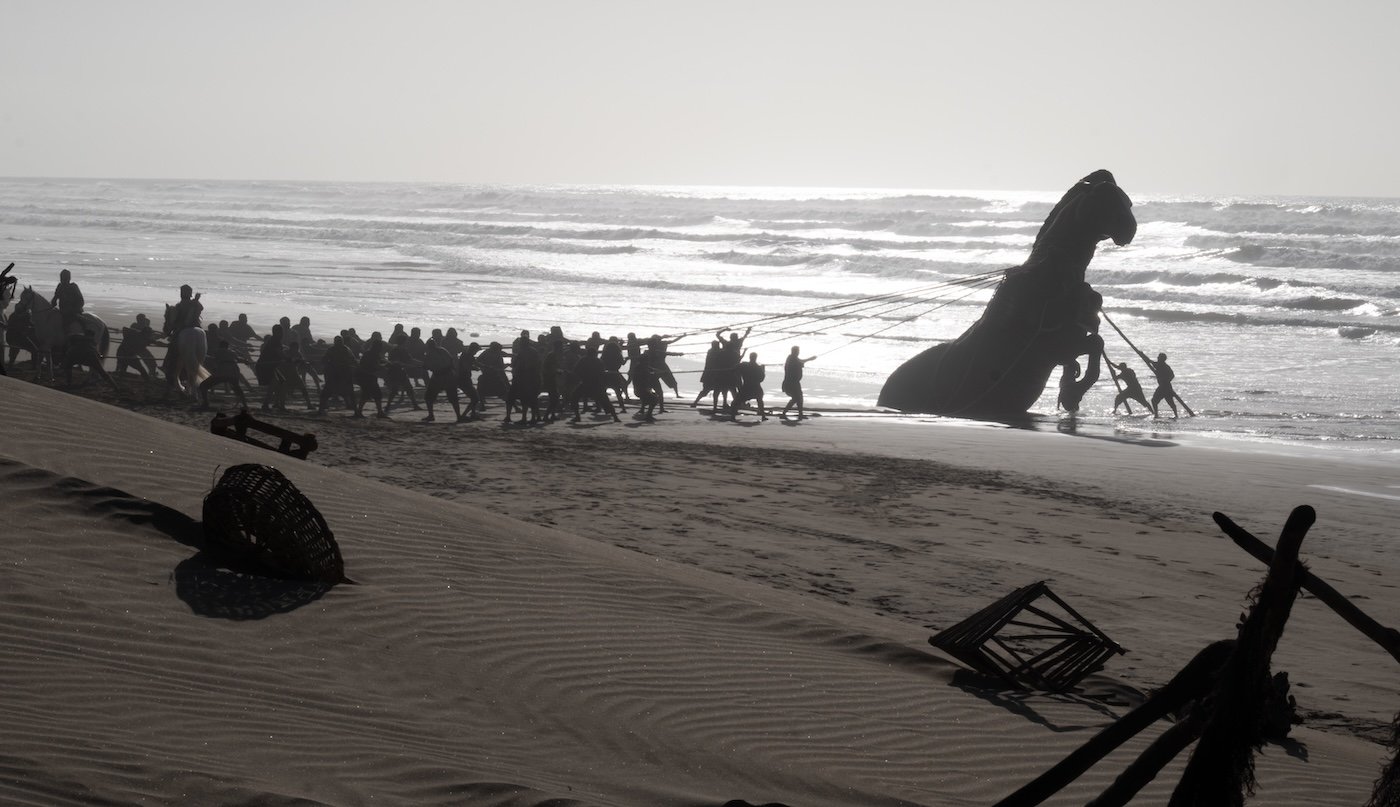
With that established, I want to turn my attention to what stood out to me most about The Odyssey. At its core, this is a story less about monsters and impossible voyages than it is about a man learning to live with the consequences of his own decisions. Don't get me wrong, the film is still packed with larger-than-life creatures and breathtaking set pieces. They're spectacular to watch, but they aren't the heart of the experience. Beneath the spectacle is a deeply human story about guilt, identity, and the emotional cost of war.
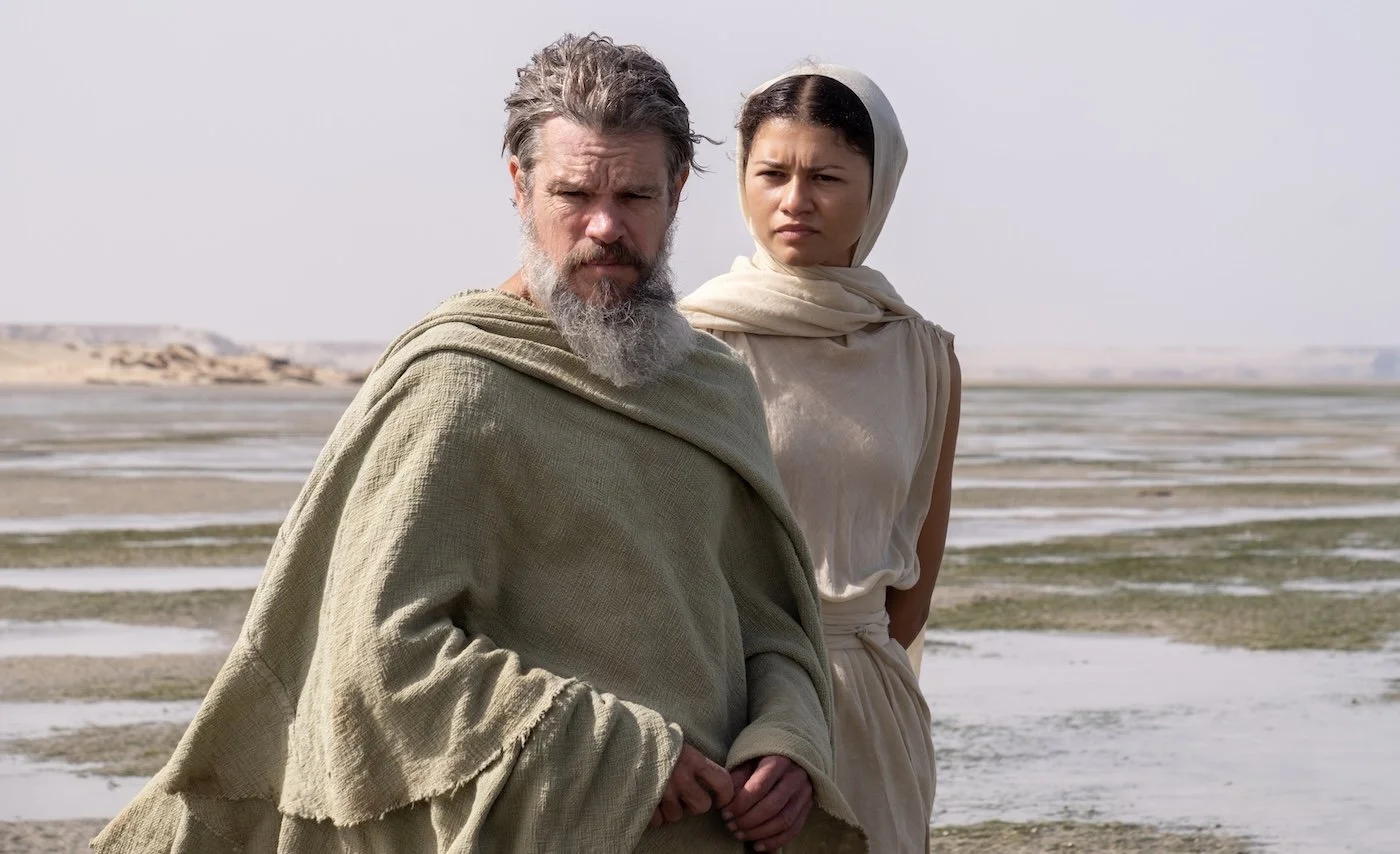
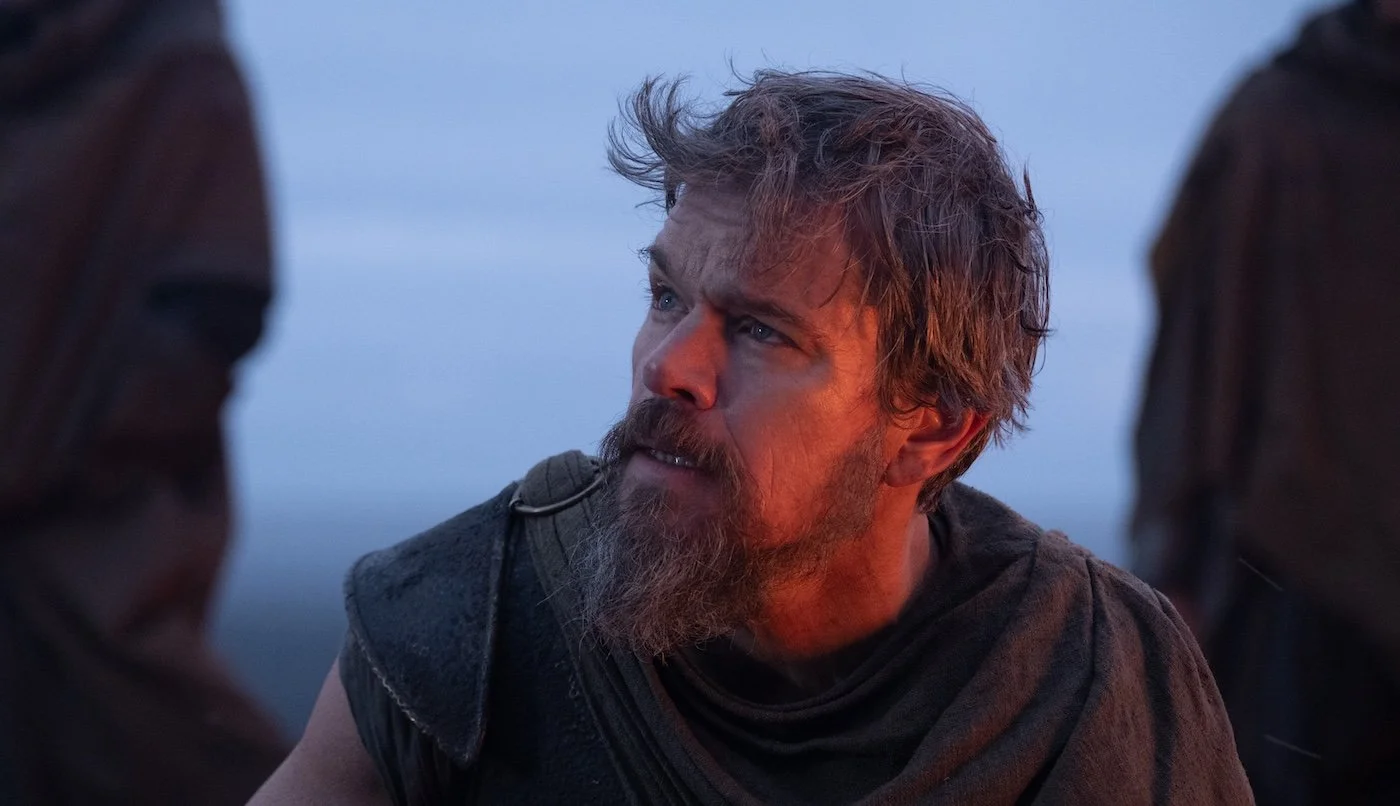
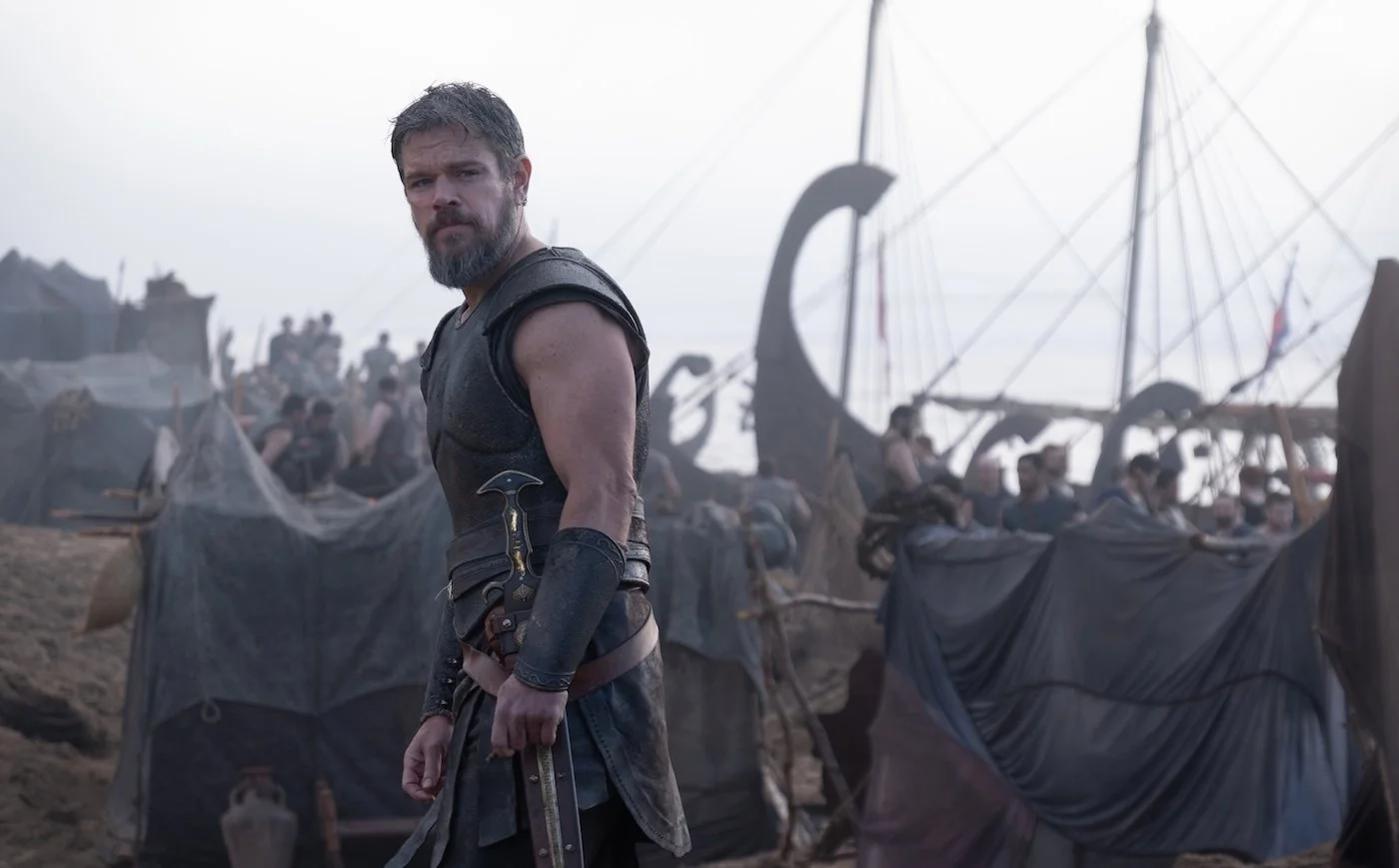
Matt Damon delivers one of the strongest performances in the film, bringing a surprising amount of vulnerability to a character so often remembered for his heroics. His Odysseus is intelligent, resourceful, and undeniably proud, but Damon never allows those qualities to overshadow the man beneath the legend. As the story unfolds, we watch someone forced to confront the consequences of his own decisions, carrying the weight of every loss and every mistake. It's that internal struggle, more than any battle or mythical creature, that makes his performance so compelling.
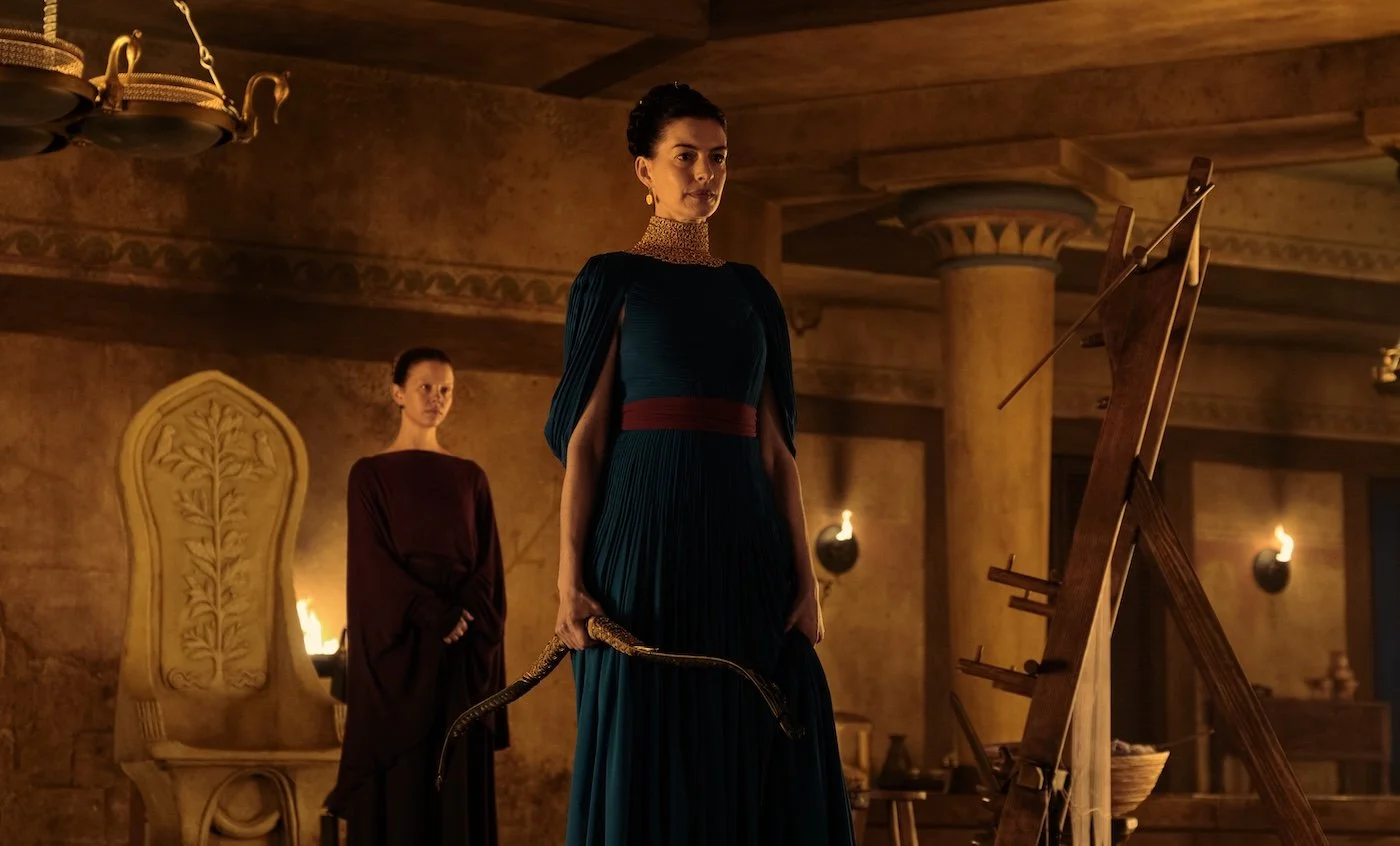
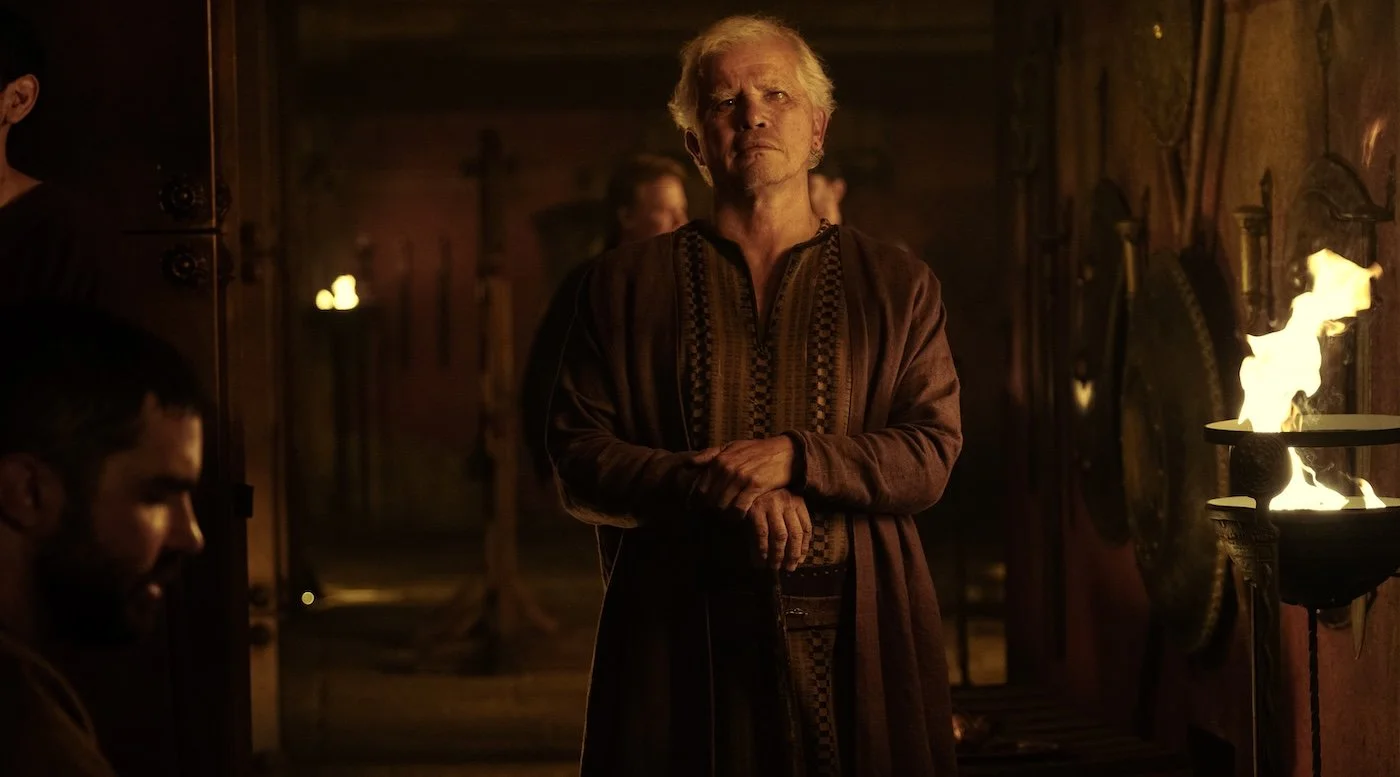
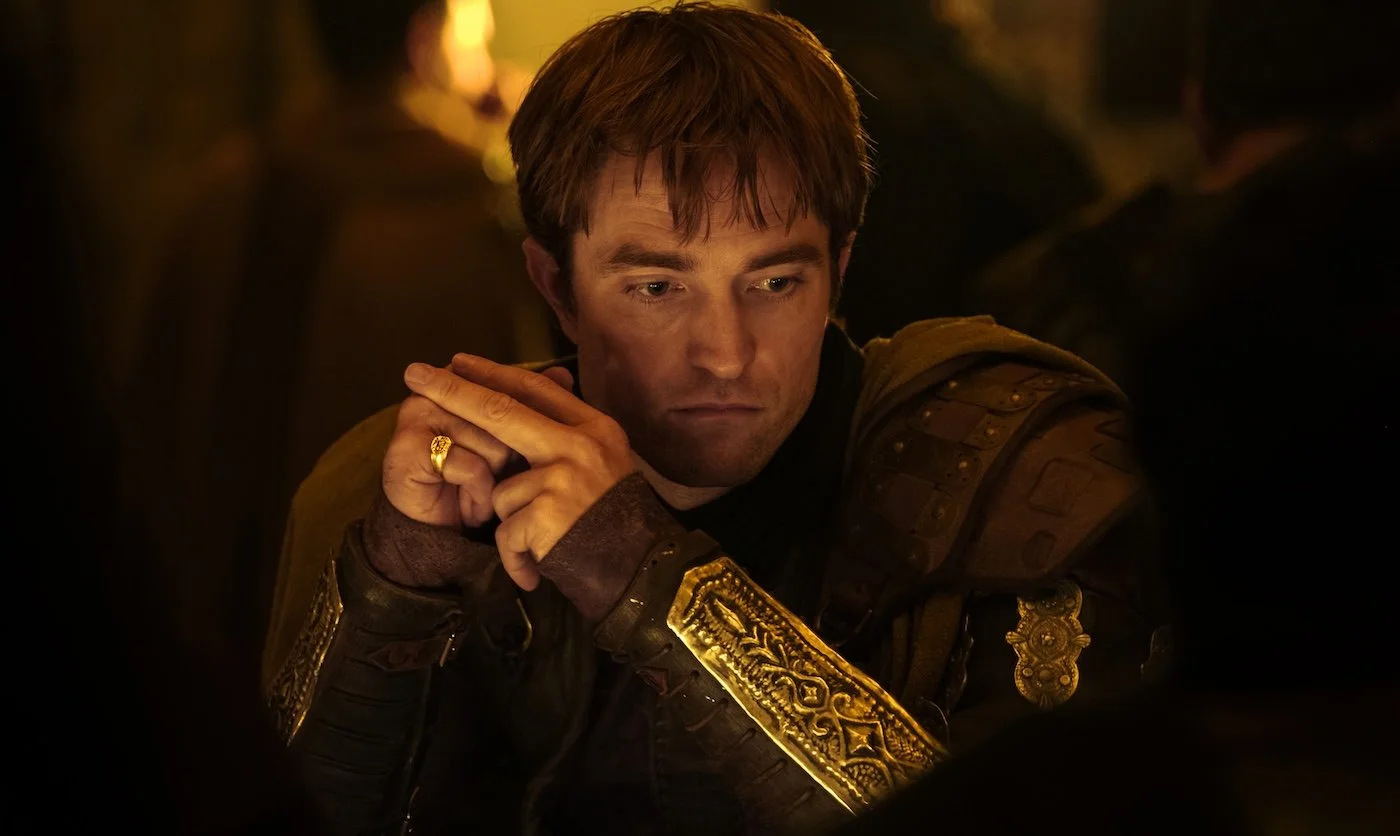
The supporting cast is equally impressive, with each actor bringing something meaningful to the story. Anne Hathaway delivers a quietly powerful performance as Penelope, while Robert Pattinson is captivating as the calculating Antinous. John Leguizamo brings warmth and sincerity to Eumaeus, and Himesh Patel makes Eurylochus feel far more layered than a typical supporting character. Together, they give the world of The Odyssey a sense of emotional weight, ensuring that Odysseus' journey never feels like one he carries alone.
Outside of the performances, we have to talk about the visuals and soundtrack. Simply put, The Odyssey is a stunning film. That shouldn't come as a surprise considering it's directed by Christopher Nolan, but even by his standards, this is an incredible achievement. Working alongside cinematographer Hoyte van Hoytema, Nolan made history by creating the first feature film shot entirely with 70mm IMAX cameras, and the result speaks for itself. Every frame feels grand in scale without losing sight of the story's emotional core. If you're interested in the technical side of how they pulled it off, there are plenty of excellent breakdowns on TikTok, Instagram, and YouTube that explore the filmmaking process in far greater detail than I ever could.
Of course, visuals are only half the equation. Ludwig Göransson's score is every bit as important to the film's identity, elevating moments of wonder, tension, and heartbreak without ever overwhelming them. While watching the film, I found myself glancing over at my girlfriend several times just to see her reaction whenever the music swelled. She's not someone who usually stops to analyse things like a film's score, so seeing her visibly react to it throughout the movie told me everything I needed to know. Göransson has crafted something truly special here.
All in all, I walked out of The Odyssey with a feeling I still struggle to put into words. The sheer scale of the film is mesmerizing, and it reminded me why I love going to the cinema in the first place. While I understand some of the criticisms surrounding the film, such as the decision to have the characters speak in modern American English or the creative liberties taken with Homer's original narrative, none of those choices diminished my enjoyment. What I refuse to entertain, however, is the racism and transphobia that surrounded the film long before it ever reached audiences. Critiquing a filmmaker's creative decisions is one thing; attacking people for who they are is something else entirely, and it has no place in any meaningful discussion of this film.
If there's one thing I hope you take away from this review, it's this: go and experience The Odyssey on the biggest screen you possibly can. Unfortunately, seeing it in IMAX 70mm isn't an option here in Trinidad and Tobago, as we don't have a cinema equipped to project the format. In fact, only around 40 cinemas worldwide can. The next best option is Digital IMAX, which you can experience at CinemaOne IMAX in One Woodbrook Place. Even if you end up watching it in a standard auditorium, don't let that stop you. Films like this are exactly why cinemas exist, and The Odyssey deserves to be experienced with an audience, on the biggest screen you can find.