Why Did I Get Married Again? Review: Tyler Perry Still Won’t Dig Deeper
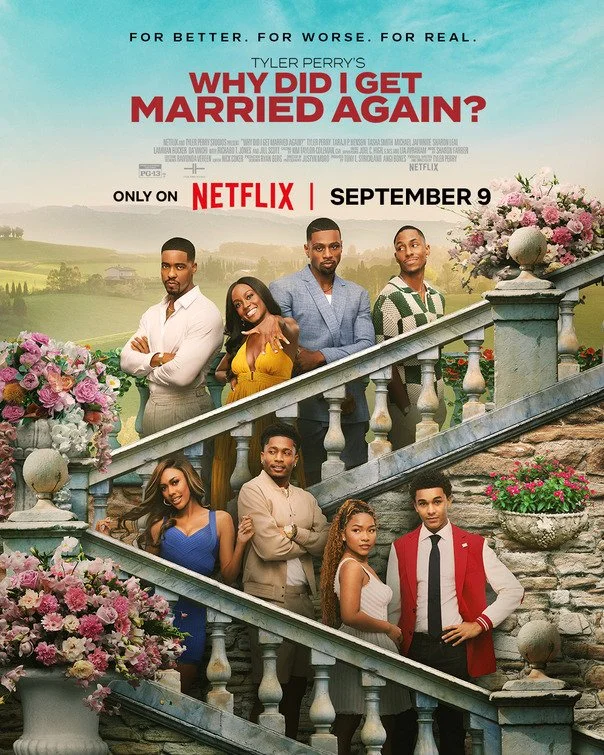
Image Courtesy of Netflix.
Before I even get into this review, I need to acknowledge something: I truly DESPISE Tyler Perry’s work. And no, it’s not because I’m some hater who can’t stand to see him succeed. Quite the opposite, actually. I remember watching a video of him showing off the production lot he owns, and I genuinely felt proud seeing a Black man reach those heights.
But honestly, that success is also part of why I struggle so much with the work he puts out. When you have that level of influence, resources, and creative control, I expect more. And far too often, what we get feels lazy, poorly written, and nowhere near the standard I think his audience deserves.
I wasn’t even planning to watch this movie, mainly because I hadn’t seen any of the films that came before it. Jennifer, however, wanted to check it out after seeing how popular it had become and was curious to see what all the hype was about.
Even without any prior context, though, I was able to figure out exactly what the story was doing and where it was headed within the first five minutes. That, more than anything, speaks to one of my biggest issues with Tyler Perry’s writing: there’s often very little subtlety or depth to any of it.
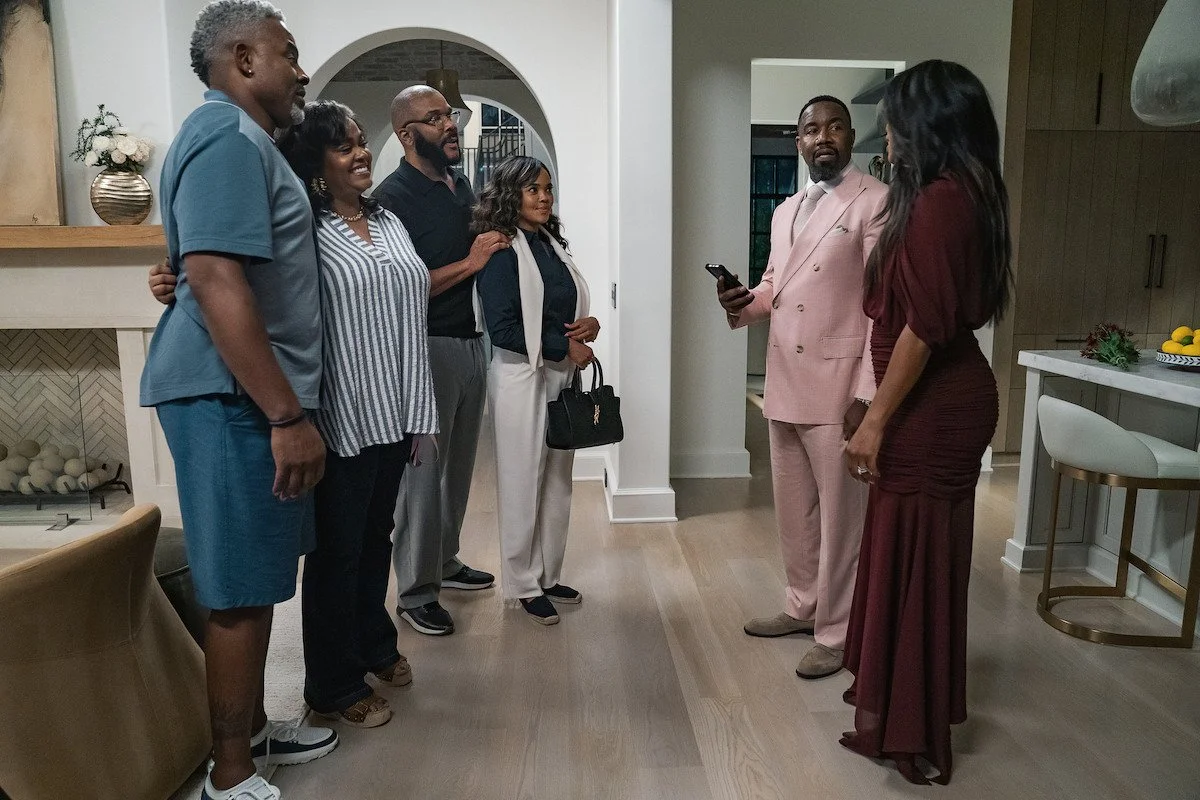
Image Courtesy of Netflix.
Let me give a quick explanation of what’s going on here. The original group of friends, including Terry, Diane, Marcus, Angela, Sheila, Troy and Mike, reunite in Italy for the destination wedding of Marcus and Angela’s daughter, Jasmine. And, of course, it wouldn’t be a Tyler Perry production without constant exposition dumps, tired tropes about Black men and women, and characters endlessly talking at each other in a way that feels more like a stage play than a film.
Somewhere in all of that, there’s also the inevitable “lesson” the movie wants us to walk away with by the time the credits roll. The problem is that, to get us there, Perry creates these unnecessarily ridiculous situations that seem to exist solely within his incredibly toxic view of Black friendships and relationships.
Sheila and Mike are probably the easiest example. Without spoiling where anything goes, these two have a history that includes abuse, yet somehow Mike is still welcomed into the same intimate spaces as everyone else and invited to something as important as this wedding. He then shows up with a girlfriend who is closer in age to the younger generation of the group, and the entire situation feels engineered for conflict rather than something these characters would realistically tolerate.
There’s another similarly strange dynamic involving Taraji P. Henson’s character, who is dating a man around her son’s age who also happened to tutor him in the past. An age-gap relationship on its own isn’t inherently a problem, but that added history creates a pretty uncomfortable power dynamic that the movie doesn’t seem particularly interested in examining. Instead, it feels like another bizarre scenario created to manufacture tension without doing the character work needed to make any of it feel believable.
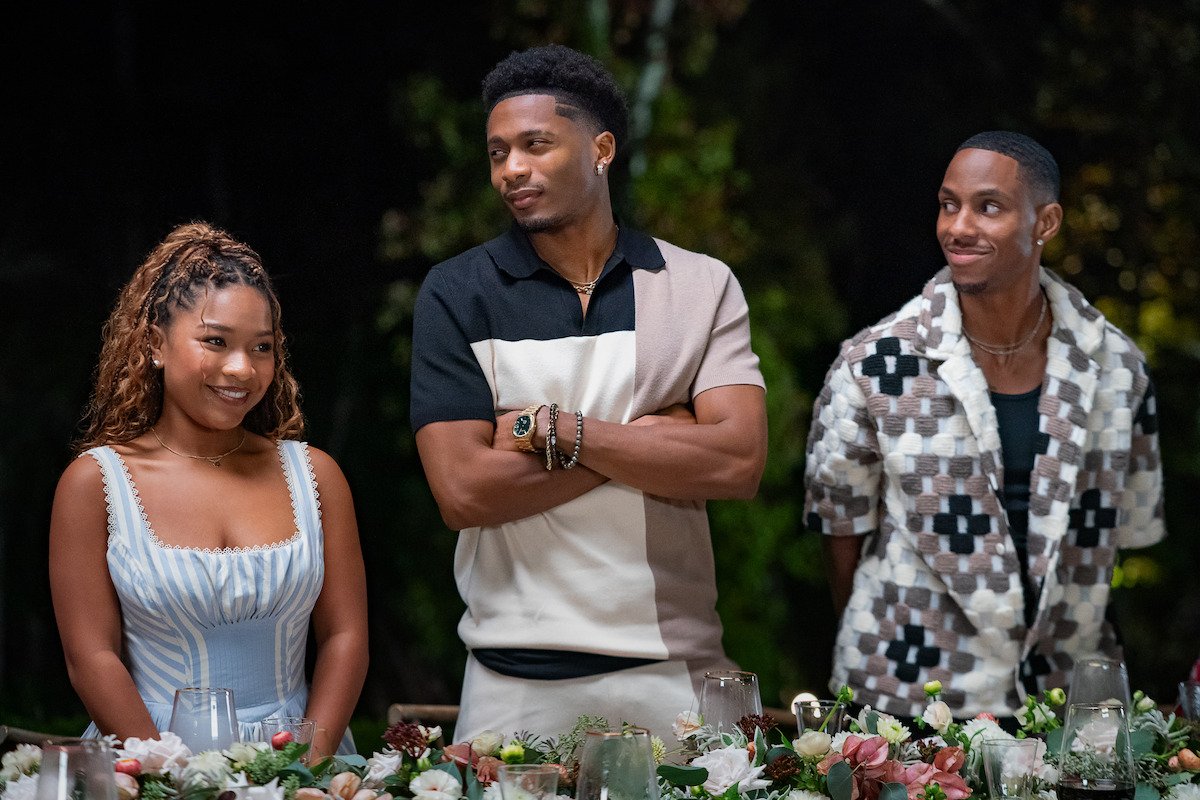
Image Courtesy of Netflix.
Before I move on from the plot, though, there are two other things I want to touch on. The entire story is built around the wedding between Jasmine, Marcus, and Angela’s daughter, and Wesley, Roselyn’s son. In theory, that should give the movie a clear emotional centre.
The problem is that Perry sidelines their relationship in favour of the usual drama surrounding everyone else. Because we spend so little time actually getting to know Jasmine and Wesley as a couple, it becomes difficult to care about their future, the problems that surface, or whether the wedding works out at all.
And that’s a shame, because one of the more interesting ideas here is watching the younger generation start to repeat the same patterns and mistakes as their parents. It’s probably the only genuinely intriguing theme in the movie for me, but once again, Perry barely does anything meaningful with it.
The idea itself makes sense. Children often absorb what they see growing up, especially when it comes to relationships, communication and conflict. The problem is that the movie only really explores that in a noticeable way through Marcus Jr., who seems to be repeating many of his father’s mistakes. His views on marriage, the way he handles his own relationship issues, and even how he reacts to Wesley marrying his sister all feel like they could have opened the door to something deeper about generational cycles.
Instead, those ideas mostly stay on the surface and are used to fuel more drama. Rather than really examining why Marcus Jr. thinks the way he does, or how much of that comes from the example set for him growing up, the movie turns it into another source of conflict and moves on. There was a much more interesting story sitting there about children inheriting the emotional baggage of their parents, but the writing never digs far enough into it.
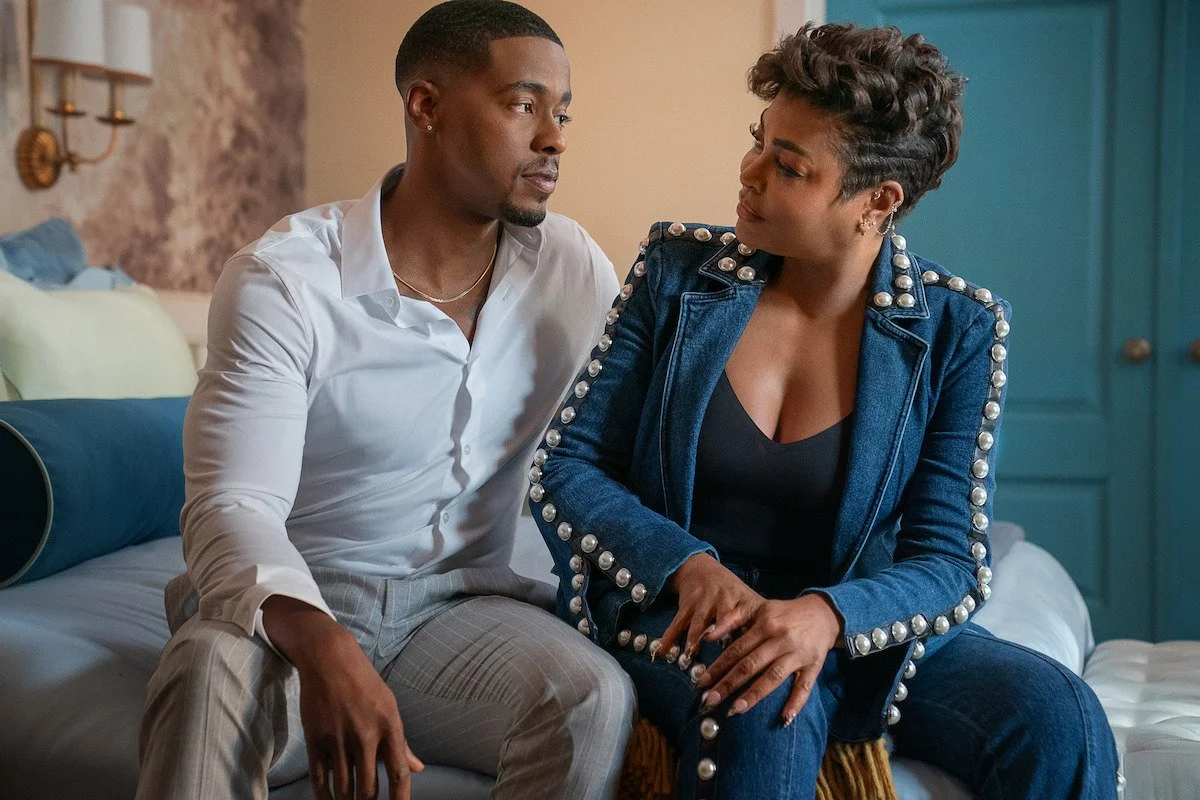
Image Courtesy of Netflix.
The performances don’t really help matters either. Everyone feels like they showed up, hit their marks, said their lines and went home. I never really bought into these people as an actual group of friends with decades of history behind them. Too many scenes feel like actors standing around waiting for their turn to speak rather than real people naturally reacting to one another. There’s very little spontaneity, emotion or texture to any of it, and that only adds to the feeling that I’m watching a stage production rather than a movie.
The production design doesn’t do much to sell the illusion either. This story is supposed to take place in Italy, but honestly, nothing about the movie ever made me feel like I was there. You could tell me this was some wealthy neighbourhood in California and I probably wouldn’t question it. The locations feel flat, the sets feel basic, and there’s very little visual personality to make the setting feel important. Again, it just feels like a play. At this point, if a curtain dropped before every background change, I might have been a little more forgiving.
All in all, Why Did I Get Married Again? is exactly the kind of Tyler Perry movie I’ve grown tired of watching. There are ideas here about marriage, generational cycles, friendship and accountability that could have made for something genuinely compelling, but almost everything is handled at the most surface level possible. Between the hollow performances, forced drama, flat production and writing that constantly tells you what to feel instead of earning it, this never felt like a real world with real people to me. It felt like a play that somehow made its way onto a movie set.