
Kagurabachi: From Meme to Machine.
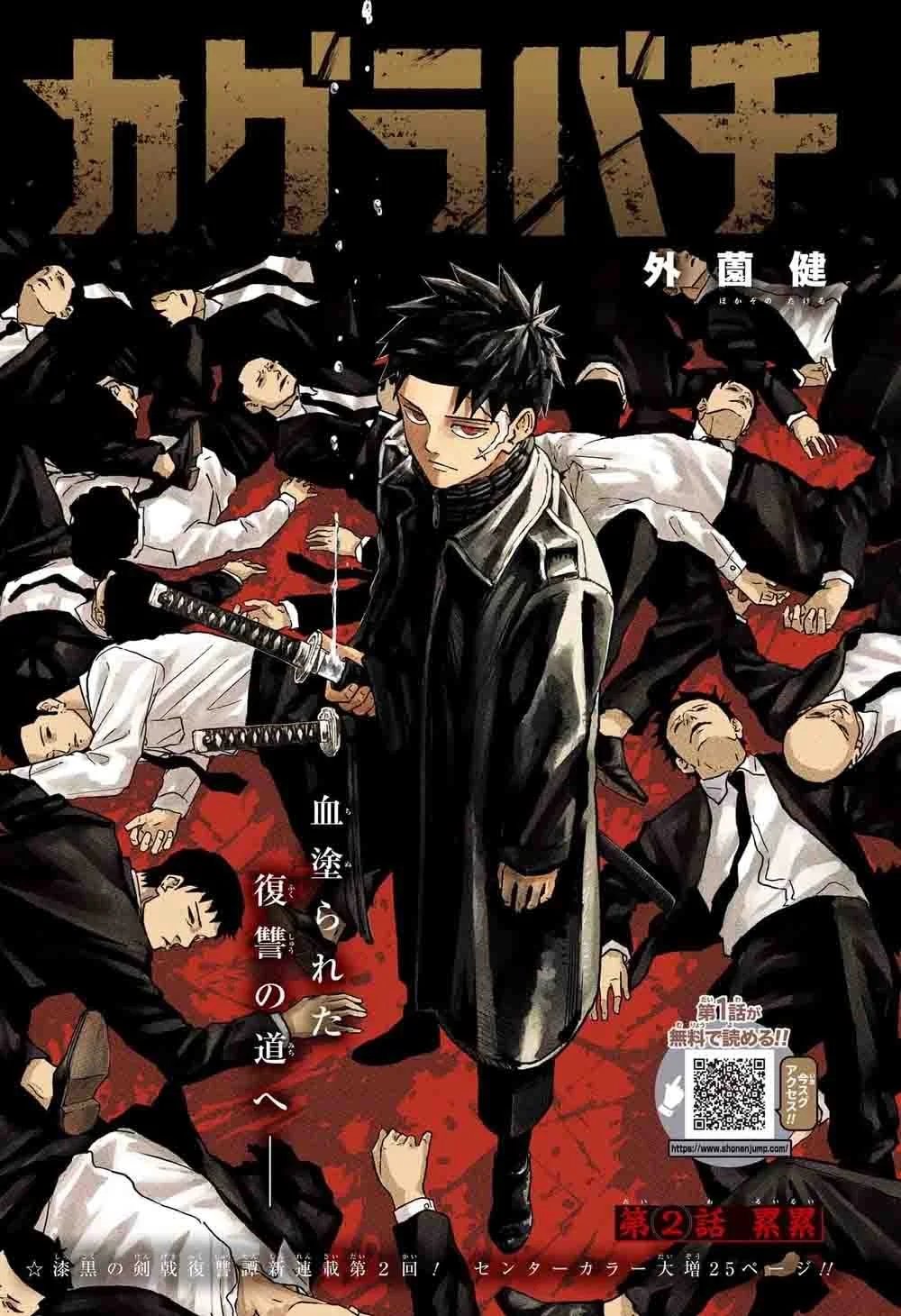
Image Courtesy of Shonen Jump.
A Beyond the Panel series retrospective, primarily focusing on part 1.
When Takeru Hokazono’s Kagurabachi debuted in Weekly Shōnen Jump on September 19, 2023, it did not enter the manga world quietly. It exploded through a wall of internet irony. Before a single page had even been released, social media had already dubbed it the “New Big 3,” pretending it had surpassed juggernauts like Naruto, One Piece, and Bleach. The early marketing only encouraged the joke, leaning into familiar dark-fantasy tropes: a brooding protagonist in a stark black trench coat, carrying a katana and swearing ruthless vengeance.
To the internet, it looked like standard edgy bait destined to be cancelled quickly. But once the chapters arrived, the irony gave way to genuine excitement. Kagurabachi proved that strong execution can elevate familiar ideas, transforming an internet meme into a compelling example of modern battle-shōnen storytelling. Let’s take a look back at Part 1 of the series, going through each major arc to see how it has grown over the years.
The VS. Sojo Arc: Ideological Clashes and the Humanization of Vengeance
The VS. Sojo Arc serves as a critical proving ground for Kagurabachi, separating it from generic battle-shōnen templates by grounding its edge in raw psychological realism. Set three years after the assassination of Kunishige Rokuhira, the creator of the mystical enchanted blades, the story follows his teenage son, Chihiro, as he pursues the shadowy sorcerer organisation known as the Hishaku to avenge his father and reclaim the stolen swords.
At the onset of the story, Chihiro is presented as a cold, hollowed-out executioner driven entirely by single-minded vengeance. Armed with the enchanted blade Enten, he walks a path soaked in blood, cutting down his opponents without hesitation. However, Hokazono deliberately plants cracks in this stoic façade early on, most notably through the introduction of Char, a young girl hunted for her rare regenerative abilities. When Char initially asks for protection, Chihiro’s immediate instinct is to decline. Yet he still offers her a meal, revealing a core contradiction in his character: while he cannot play the role of a traditional saviour, his innate moral compass prevents him from simply walking away. This eventually evolves into a strategic alliance when he realises that Char’s pursuers will lead him directly to the stolen blades.
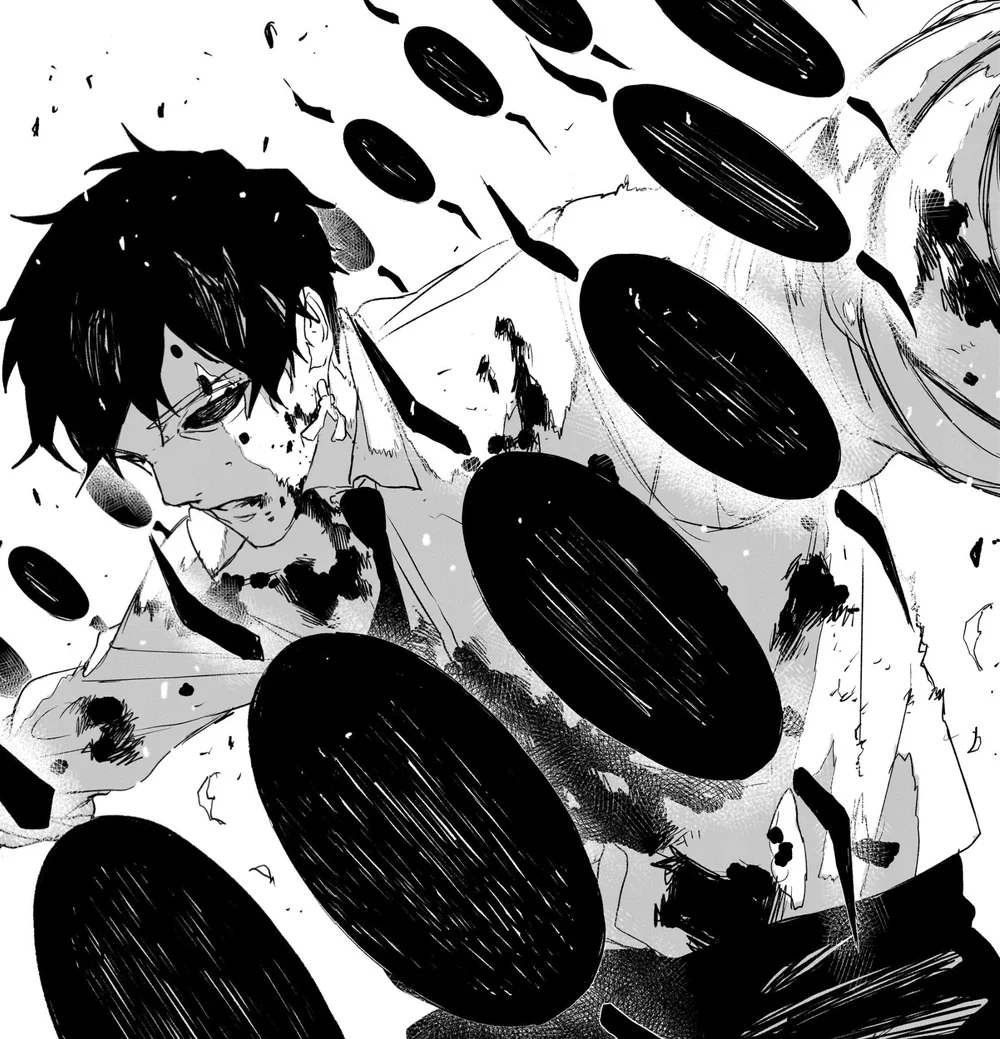
The turning point in Chihiro’s humanity comes during his fight against Sojo. Spotting a car with Char’s leg visible inside, Chihiro immediately abandons a high-stakes duel with the wielder of a stolen enchanted blade, a direct link to his father’s murderers, to chase the vehicle. Although it ultimately proves to be a decoy and he ruthlessly dispatches its occupants, the moment shatters any illusion that Chihiro is a standard, squeaky-clean shōnen protagonist. He is violent, traumatised, and hardened, yet fundamentally anchored by an inability to let the innocent suffer.
Genichi Sojo stands tall as one of the most compelling first antagonists in modern battle shōnen. Rather than operating as a cartoonish criminal overlord, Sojo is a deranged, deeply philosophical fanatic. He does not wield the enchanted blade Cloud Gouger merely as a tool for criminal power. He views Kunishige Rokuhira as a warped deity and the blades themselves as sacred, transcendent works of art. His obsession touches on the terrifying ethics of craftsmanship.
He believes that true masterpieces require immense sacrifice, completely rationalising the atrocities necessary to unlock Cloud Gouger’s ultimate potential. This creates a brilliant ideological mirror: Sojo worships the destruction and power born from Kunishige’s genius while missing the compassionate intent behind the blades’ creation. Chihiro, meanwhile, honours his father’s humanity and philosophy, treating every blade as a heavy burden meant to protect human life.
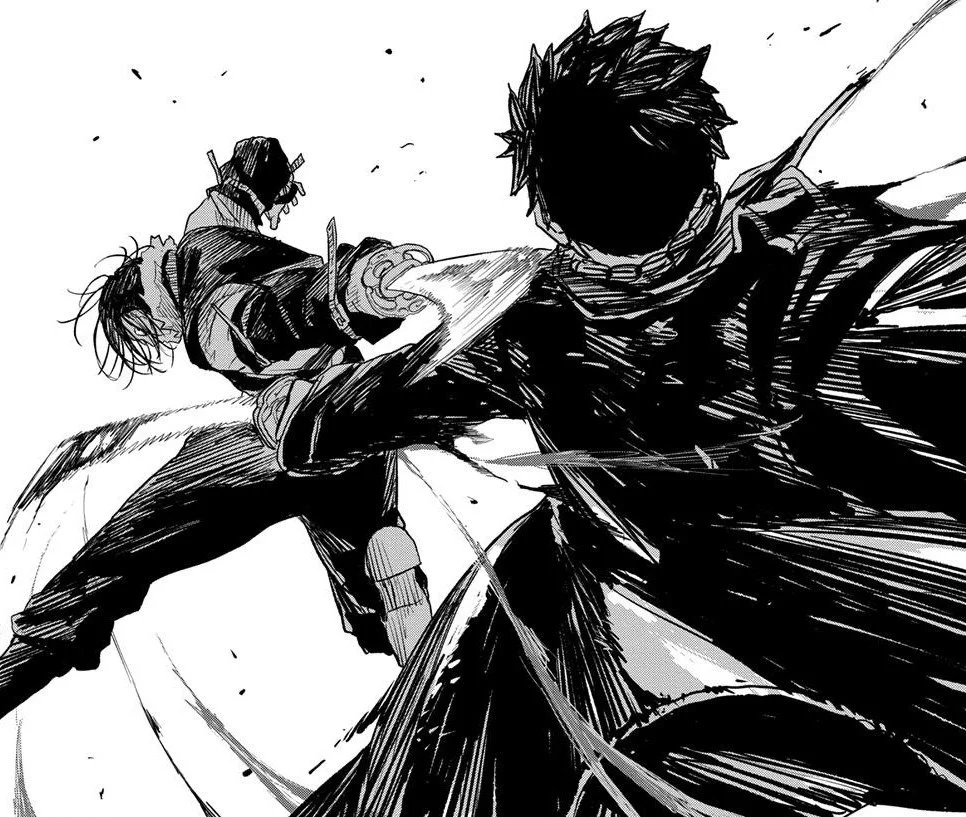
Image Courtesy of Shonen Jump.
The Rakuzaichi Arc: Climax, Conclusion, and Core Themes
The Rakuzaichi Arc is widely considered the point at which Kagurabachi evolved from a breakout hit into a more ambitious, layered battle shōnen. Moving beyond the localised cat-and-mouse conflict between Chihiro and Sojo, the arc broadens the story into a high-stakes siege on the Rakuzaichi, an underground black-market auction operated by the criminal Sazanami family.
At the centre of the arc is Chihiro’s alliance with Hakuri Sazanami, the clan’s outcast son. Hakuri embodies everything the underworld rejects: he is empathetic, deeply vulnerable and determined to dismantle the empire his family has built. What begins as a tactical partnership gradually develops into a brotherhood shaped by shared survival. Chihiro gives Hakuri the confidence to act, while Hakuri reminds Chihiro that protecting people is just as important as defeating his enemies.
The arc also expands the mythology surrounding Kunishige’s enchanted blades, particularly through the Shinuchi, or Magatsumi. Unlike Cloud Gouger or Enten, the Shinuchi is not simply a powerful weapon. It is a psychological and physical catastrophe whose presence transforms the atmosphere of the entire arc. Its influence reveals the corrupting weight of the blades created during the Seitei War, dwarfing anything Chihiro has faced before.
Kyora Sazanami’s Storehouse Sorcery further elevates the arc’s action. Battles unfold across shifting boundaries, dimensional vaults and layered terrain, forcing Chihiro and Hakuri to rely on tactical ingenuity rather than brute strength alone. The setting becomes more than a backdrop; it constantly changes the rules of the conflict.
The climax is a brutal and emotional war of attrition against Kyora, a man fiercely devoted to preserving his family’s legacy. He blindly justifies the Rakuzaichi’s human trafficking and illegal trade as necessary sacrifices for the Sazanami name. As the battle reaches its breaking point, Kyora pushes himself to the limit in an attempt to withstand the Shinuchi’s influence. Yet his true defeat is psychological rather than physical. When he looks at Hakuri and finally recognises the catastrophic cost of his rigidity, along with how profoundly he failed to understand his role as a father, the illusion holding his worldview together begins to collapse. Kyora dies stripped of his dogma, making his end one of the most poignant and complex villain deaths in recent shōnen.
Through Hakuri and Kyora, the Rakuzaichi Arc explores the damage caused by generational trauma and familial expectations. Hakuri has been conditioned to believe that his worth depends entirely on possessing the dominant sorcery valued by his family. His rebellion is therefore more than an act of defiance; it is the painful process of rebuilding an identity rooted in empathy and personal choice rather than inherited exploitation.
The Sazanami family also represents a different form of evil from Sojo’s individual fanaticism. Their cruelty has been institutionalised, disguised as tradition, prestige and commerce. The Rakuzaichi normalises human misery by turning it into a respectable family business, demonstrating how entire systems can become complicit in violence while convincing themselves that they are merely preserving order.
Ultimately, Hakuri’s greatest development comes from rejecting the idea that he is useful only when he can serve his family’s interests. Through his bond with Chihiro, he begins to define his self-worth through empathy, agency and his willingness to stand up for the helpless. That shift is what makes the Rakuzaichi Arc more than an elaborate battle. Beneath the spectacle, it is a story about breaking away from a legacy built on abuse and deciding what kind of person you want to become.
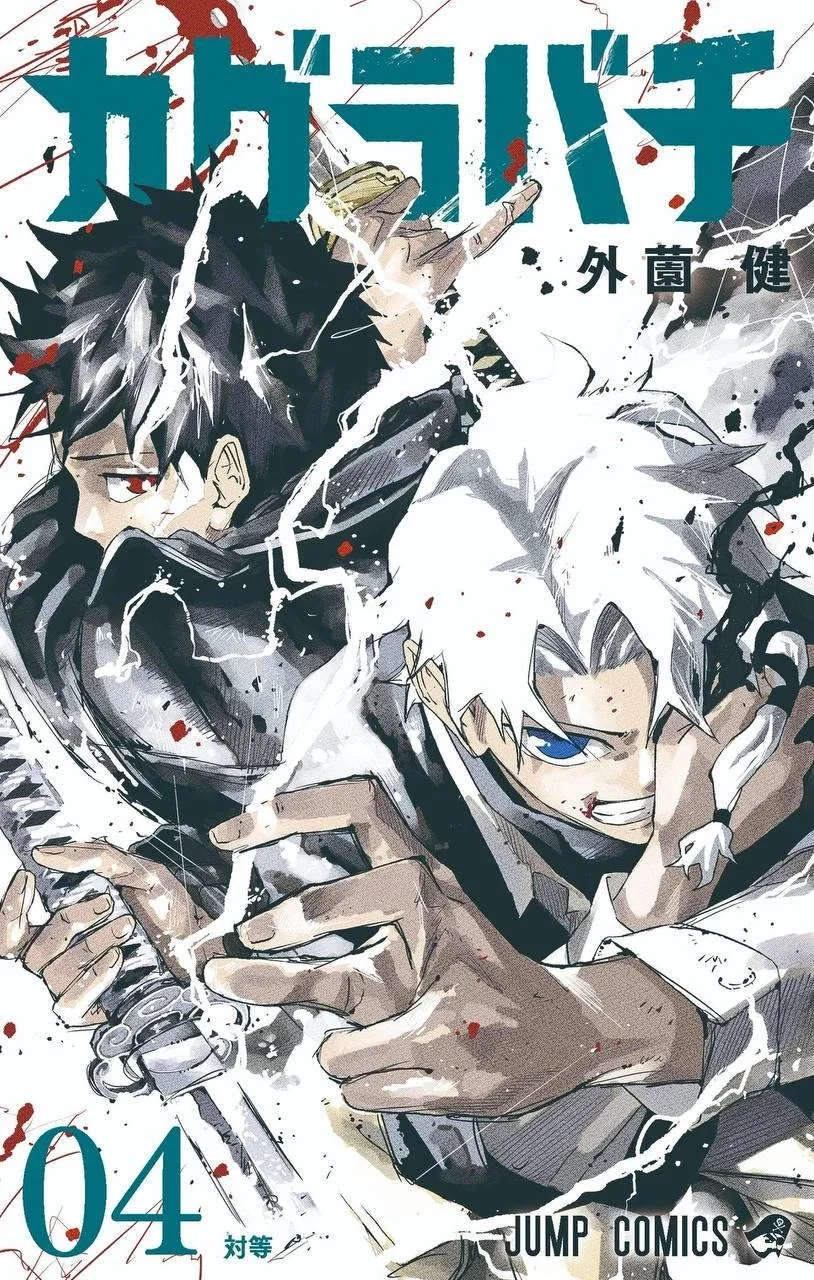
Image Courtesy of Shonen Jump.
The Sword Bearer’s Assassination Arc: Psychological Warfare, Clashing Worldviews, and Samura’s Tragedy
The Sword Bearer’s Assassination Arc serves as the monumental centrepiece of Part 1, pivoting Kagurabachi from a localised gang war and syndicate takedown into a sprawling, psychologically complex military and political tragedy. When the Hishaku target the surviving wielders of the enchanted blades in an attempt to bypass their unbreakable lifelong contracts, known as the Meimetsu Keiyaku, the narrative plunges headfirst into the haunting legacy of the Seitei War.
1. The Mental War: Chihiro vs. Hiruhiko
The psychological core of the arc plays out through the conflict between Chihiro and Hiruhiko, a reckless agent of chaos weaponised by the Hishaku.
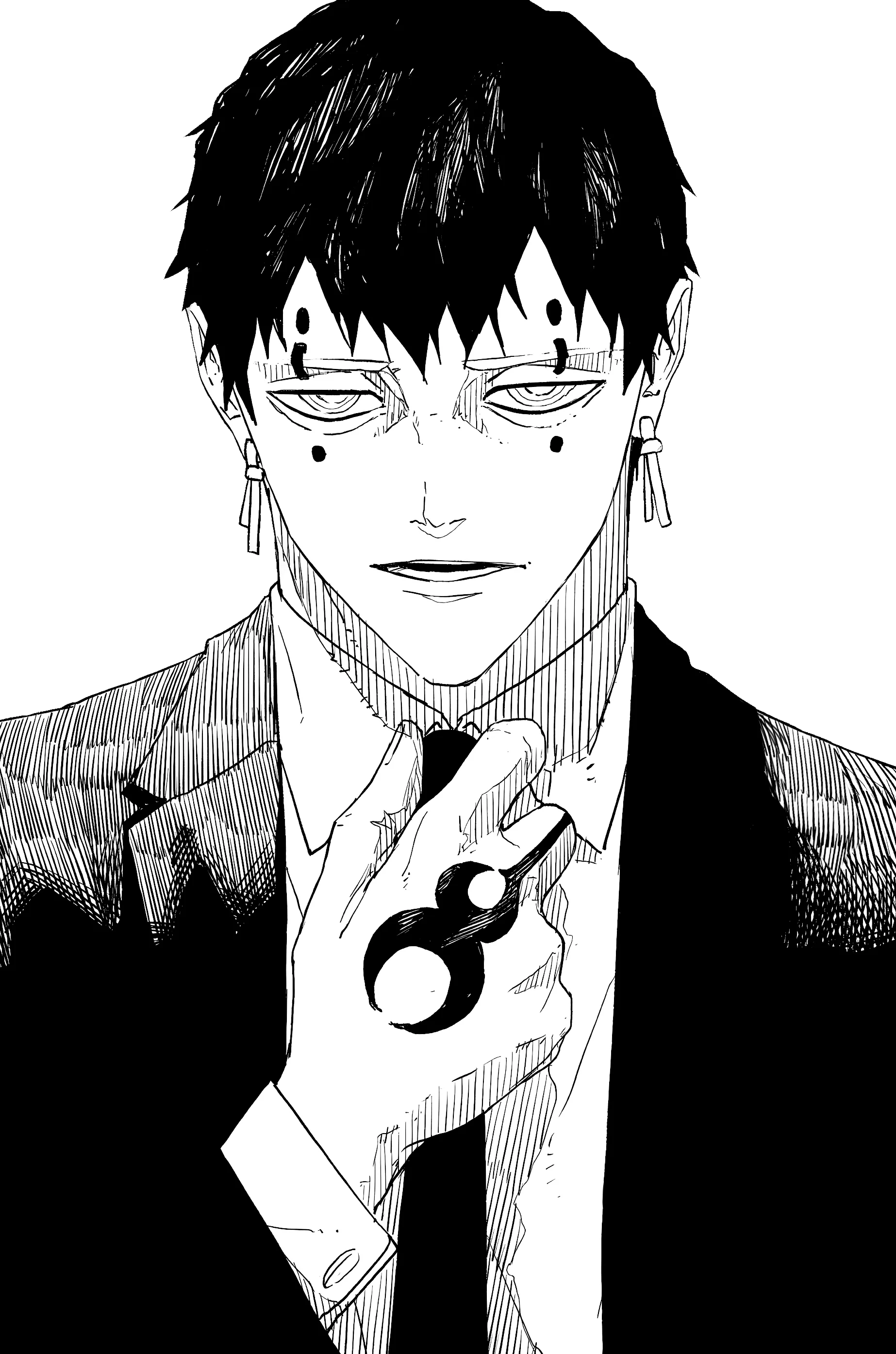
Their clash is built around opposing views of objects and their meaning. Hiruhiko wields the enchanted blade Kumeyuri, which feeds on how individuals value and respect objects. This manifests through its sensory-manipulation technique, Banquet, and its destructive counterpart, Destructive Play. Hiruhiko’s philosophy is rooted in absolute nihilism: he views objects, tools, and human lives as completely disposable.
This creates a powerful thematic mirror to Chihiro, whose identity is defined by his deep reverence for his father’s craftsmanship. Chihiro treats every blade and tool as an extension of human life and intent. Their mental war is therefore not fought with steel alone; it is a battle over meaning. Hiruhiko attempts to break Chihiro by arguing that his father’s creations, along with the sacrifices made by the war veterans, ultimately gave birth to a broken world filled with suffering. His goal is to strip Chihiro of the moral conviction that guides him.
2. Yura’s Worldview and Akemura’s Takeover
Throughout the arc, Yura, the enigmatic leader of the Hishaku, acts as a chilling philosophical mastermind. His worldview exposes what he sees as the hypocrisy of the Kamunabi and the wider state apparatus. He argues that the country’s peace was built on hidden massacres and maintained by silencing the very people who won the war.
To Yura and his followers, the Hishaku’s campaign is not mindless terrorism. It is a form of revelation: an attempt to open the state’s vaults, expose the sword bearers’ darkest secrets, and tear down the institutional lies that keep society placated.
This worldview reaches its chilling climax when Yura’s physical body is pushed to its limit. Rather than dying a traditional villain’s death, the gravely wounded Yura allows himself to be completely overwritten and possessed by Akemura Soga, the legendary Sword Master eternally bound to Magatsumi, or the Shinuchi, the most powerful and destructive of all the enchanted blades.
Akemura’s takeover signals a terrifying shift in the conflict. The Hishaku’s calculated conspiracy gives way to raw, apocalyptic dominance as the strongest wielder takes command.
3. Seiichi Samura’s Heartbreaking Story
The emotional anchor of the entire arc belongs to Seiichi Samura, the bearer of Tobimune. To understand Samura is to understand the true psychological cost of the Seitei War.
While the public views the sword bearers as unblemished national heroes, Samura and his peers carry the crushing guilt of having wielded weapons of mass destruction. They did not win the war through honour alone; they ended it through unmatched devastation. Samura, therefore, sees himself not as a protector but as a living monster who should have died in the war.
Driven by this profound trauma, Samura follows a harrowing internal logic. If the enchanted blades are inherently instruments of slaughter and can never truly be undone, then the only way to prevent future atrocities is to orchestrate the assassination of every surviving sword bearer, including himself. He embraces the inevitability of death because he believes total eradication is the only form of redemption left.
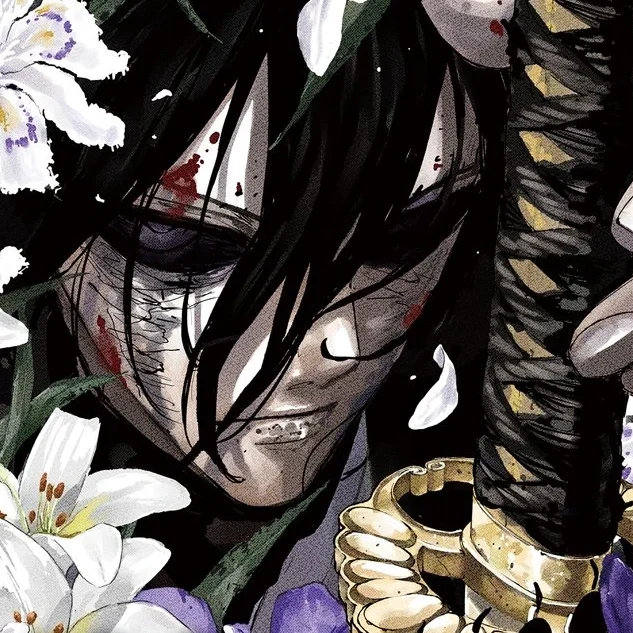
This culminates in one of the most shocking gut punches in modern manga. After a grueling defensive stand at Senkutsuji Temple alongside Chihiro and fellow bearer Yoji Uruha, a moment of profound hope is instantly shattered. In a cold, calculated betrayal born from his suicidal crusade to purge the world of the blades’ lingering curse, Samura turns Tobimune on Uruha and executes him.
Samura’s story subverts the classic shōnen trope of the wise mentor. He is a broken veteran whose unconditional love for his comrades has been eclipsed by his desperate desire to burn away the sins of their shared past. In the process, he leaves Chihiro and the remaining survivors to pick up the bloody pieces of a fractured world.
In Conclusion
Part 1 of Kagurabachi began as a joke and ended as one of the most compelling shōnen stories of its generation. The meme got people to open the first chapter, but the series earned their continued attention.
Across 112 chapters, Takeru Hokazono transformed a straightforward revenge story into something far more meaningful: an exploration of what we owe the people we protect, who deserves to be called a hero and how a weapon ultimately reflects the person wielding it.
Chihiro is the force that holds everything together. He begins as a hollow avenger with a sword and a list of enemies, but gradually becomes a young man whose strength comes from the people he refuses to lose and the craft his father left behind. The villains matter because each one challenges a different part of that growth. Sojo tests Chihiro’s compassion, Yura gives him a patient and ideological enemy, Hiruhiko shows him what it looks like to find joy in killing, and Samura forces him to question whether the world’s heroes deserve that title at all.
The series has also earned the hype surrounding it. The initial fear was that a meme-fuelled launch would collapse under the weight of its own expectations. Instead, Kagurabachi has grown more confident with every arc. Its action is clear and dynamic, while its quieter moments, whether over soba, sandwiches or tea, can land just as powerfully as its duels. Any series that can make you care about a shared meal before breaking your heart with a sword fight is doing something right.
Part 1 ends with the true story of the Seitei War still unfinished. Part 2, which began in February 2026, returns to that conflict to finally tell it. With an anime adaptation coming in April 2027 and millions of copies already in circulation, Kagurabachi has evolved from an internet joke into a genuine phenomenon.
The meme brought readers in, but the story is what made them stay.