72 Hours Review: A Comedy Without the Comedy
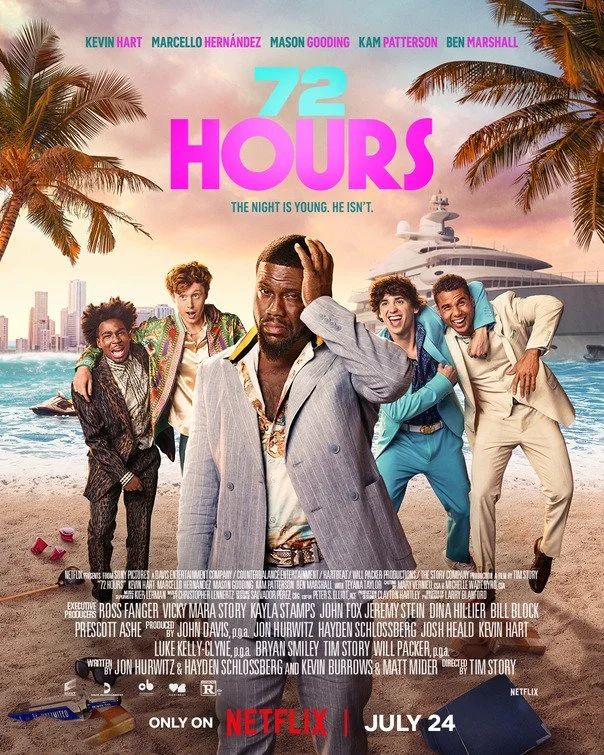
Oh boy, where do I even begin with this movie? After a long day at work, my girlfriend and I decided to look for something to watch, and somehow we ended up scrolling through Netflix’s Top 10. Now, did I go there expecting to find some hidden gem? No. But I also didn’t expect to stumble across what might genuinely be one of the worst movies of the year.
And when I say one of the worst, I’m not being hyperbolic. 72 Hours is truly terrible. Not terrible in the sense that it’s a poorly put-together film, but terrible because it fails at almost everything that makes a comedy actually work. Some people seem to think that a good comedy just needs to have endless silly jokes, ridiculous moments, and offensive characters, but that just doesn’t work.
Good comedy relies on so much more than simply throwing jokes at the audience, and I understand that comedy itself is incredibly broad. What works for one type of comedy may not work for another, but there are still certain fundamentals that the best of them tend to understand. Take The Hangover, for example. It’s a movie built on a similarly ridiculous premise, with a group of guys heading out for a bachelor party before everything predictably goes completely off the rails. Yet, more than 15 years later, the movie still works because the comedy isn’t carried by the absurdity alone. It works because Bradley Cooper, Ed Helms, and Zach Galifianakis have such strong chemistry that you completely buy into this dysfunctional group being stuck together.
Phil, Stu, and Alan are wildly different personalities, and that contrast is where so much of the humour comes from. Phil is the confident one who thinks he has everything under control, Stu is constantly anxious and increasingly unhinged, and Alan is, well, Alan. The movie understands exactly who these characters are and continuously puts them into situations designed to bring out the funniest parts of their personalities. You’re not simply waiting for someone to tell a joke. Watching these three react to one another is the joke.
And as ridiculous as The Hangover becomes, there is still a believable dynamic holding everything together. The characters argue, panic, get frustrated with each other, and make increasingly terrible decisions, but they still feel like actual people responding to an insane situation. That chemistry gives the chaos somewhere to come from.
That is what makes this style of comedy work. The absurdity keeps escalating, but the humour grows naturally alongside it. 72 Hours feels like it desperately wants to tap into that same formula, to the point where it occasionally feels like a bargain-bin version of The Hangover, but it never establishes the chemistry or character dynamics needed to make that kind of chaos funny in the first place.
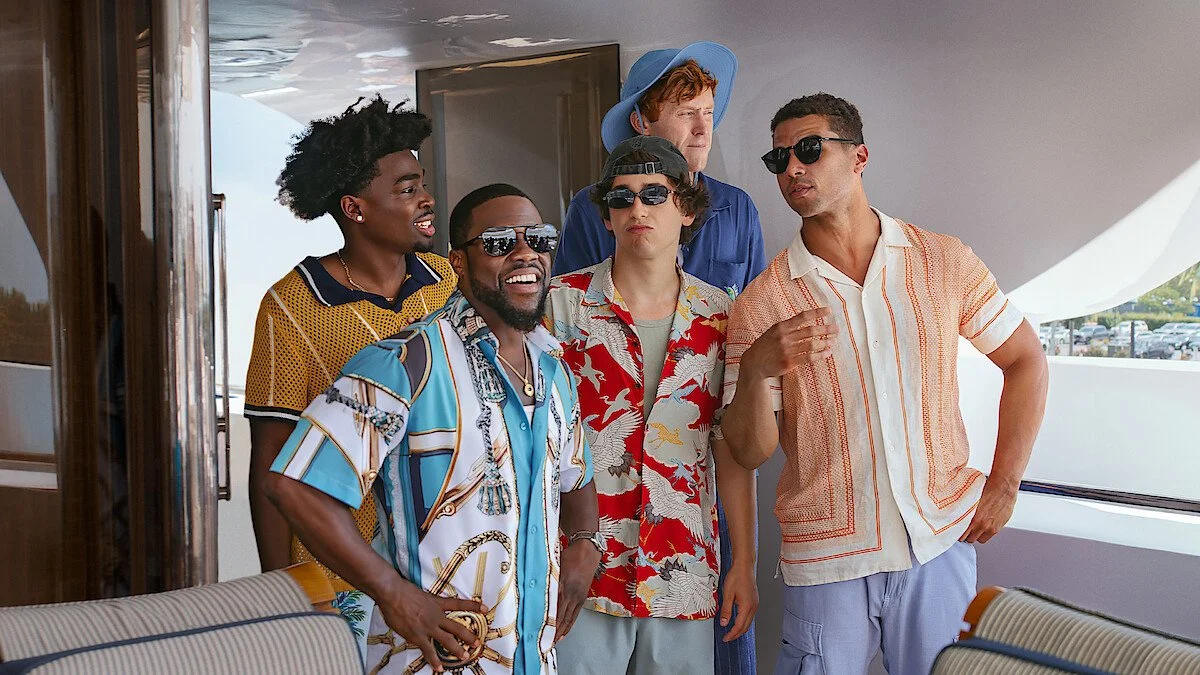
72 Hours, unfortunately, is the complete opposite. Where The Hangover builds its comedy around a group dynamic that feels natural even when everything around them becomes ridiculous, 72 Hours never establishes that same foundation. Kevin Hart is joined by Saturday Night Live cast members Marcello Hernández, Kam Patterson, and Ben Marshall, with Mason Gooding rounding out the main group.
On paper, that should already give the movie a strong comedic foundation. Three of these five actors literally work together every week on SNL, performing sketches that depend heavily on timing, chemistry, and the ability to play off one another. Yet somehow, in 72 Hours, that chemistry is practically nonexistent. The banter rarely feels natural, their conversations feel more scripted than spontaneous, and there’s very little about the group dynamic that convinces you these characters would actually be friends.
And that’s where we should probably talk about the story, because on paper, 72 Hours actually has a premise that sounds like it could work. Without getting into spoilers, the movie follows Kevin Hart as Joe Nixon, an advertising specialist who is accidentally added to a group chat where a group of younger guys are planning a bachelor party.
With his job suddenly at risk because he’s apparently losing touch with the younger generation, Joe sees the trip as the perfect opportunity to study them up close and figure out what makes them tick. Naturally, he decides the best way to reconnect with the youth is to invite himself along for the ride.

That premise is nothing particularly special, but it’s also not inherently bad. With a better writing team and a director who understood comedic timing, character dynamics, and how to let humour develop naturally, there’s probably a genuinely decent movie somewhere in here. Even the cast feels like it should have been capable of bringing that idea to life. Unfortunately, 72 Hours never comes close.
I don’t enjoy being this harsh on a movie, but I also can’t pretend I had a good time with it. I genuinely don’t think I laughed once. Not a chuckle, not a smile, nothing. Kam Patterson’s performance in particular did absolutely nothing for me, with almost every attempt at humour falling painfully flat. And then there’s an absolutely abysmal sequence involving Kevin Hart doing a Scarface bit that perfectly captures just how desperately this movie tries to be funny. I could explain it, but honestly, I’d rather you experience that disaster for yourself.
72 Hours isn’t terrible because it’s incompetently made. It’s terrible because, as a comedy, it commits the one sin that is almost impossible to forgive: it simply isn’t funny.