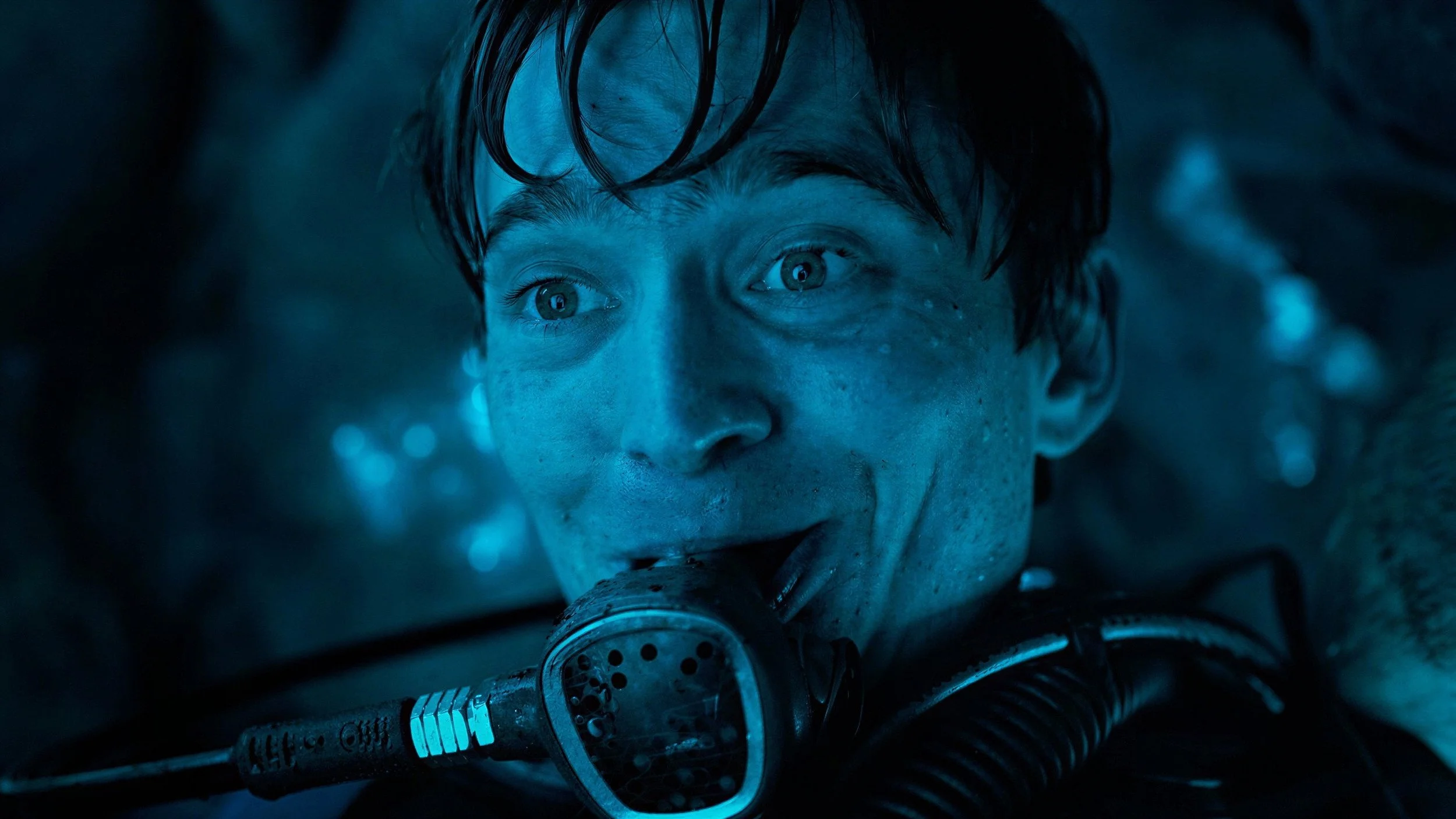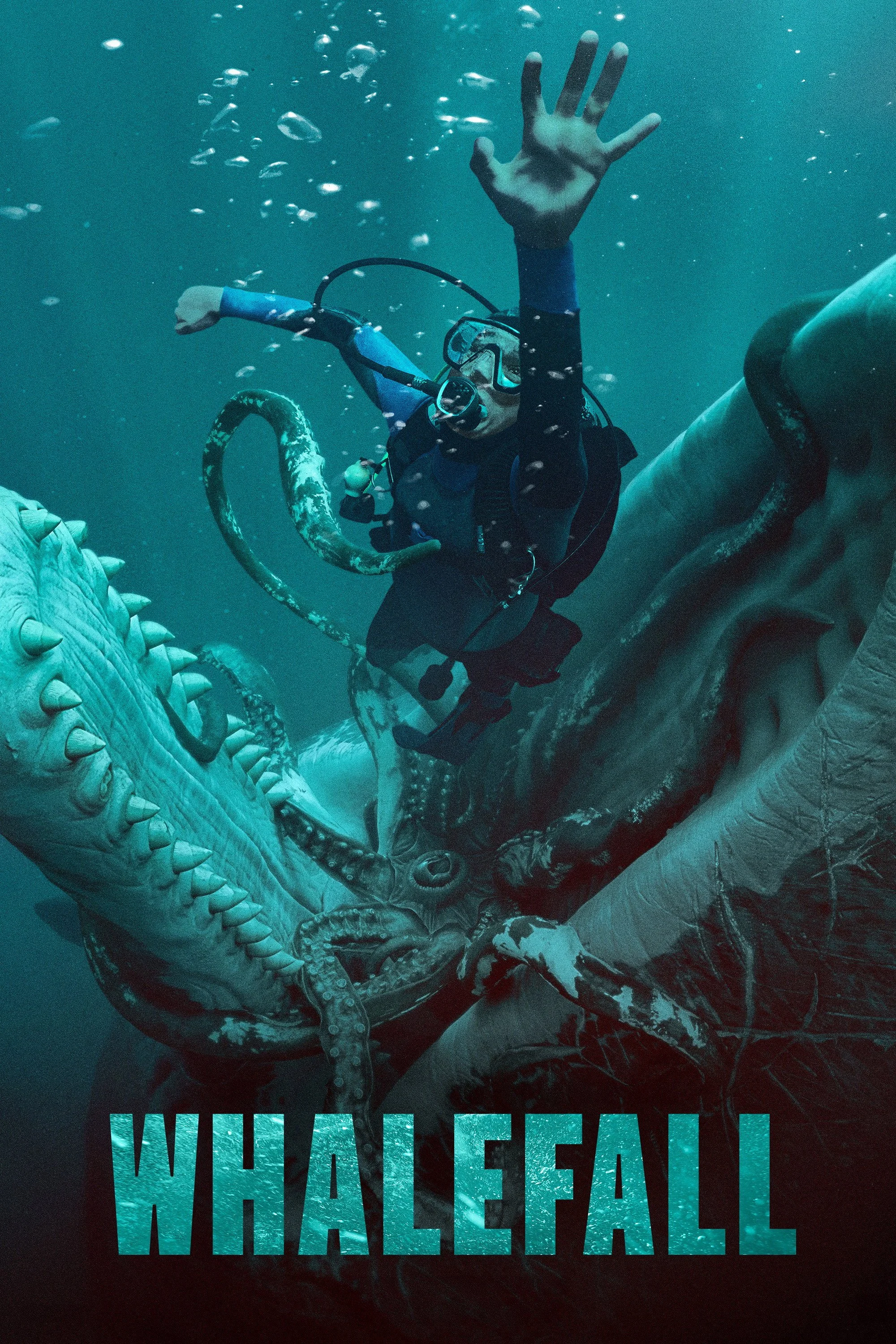
Fresh off his appearance in Zach Cregger's Resident Evil, Austin Abrams is back on the big screen in Whalefall, this time trading horror for a survival thriller. Directed by Brian Duffield, the film follows Jay Gardiner (Abrams), the youngest child of Mitt Gardiner (Josh Brolin), a well-known local diver with whom he shares a complicated relationship.
After being diagnosed with mesothelioma, Mitt decides to take his own life by jumping into the ocean at Monastery Beach in Central California. Before doing so, he leaves sealed letters for his wife and three children. However, his body is never recovered, leaving the family to hold a funeral with an empty casket.
Making matters worse for Jay is the fact that he had stopped speaking to his father before his death, leaving him with plenty of unresolved feelings and no opportunity to make amends. A year later, he returns home and decides to embark on a solo scuba diving expedition, hoping to recover his father's remains and finally bring some closure to his family. Unfortunately, what begins as a deeply personal journey quickly turns into a terrifying fight for survival, as Jay finds himself in a situation that neither he nor anyone else could have anticipated.
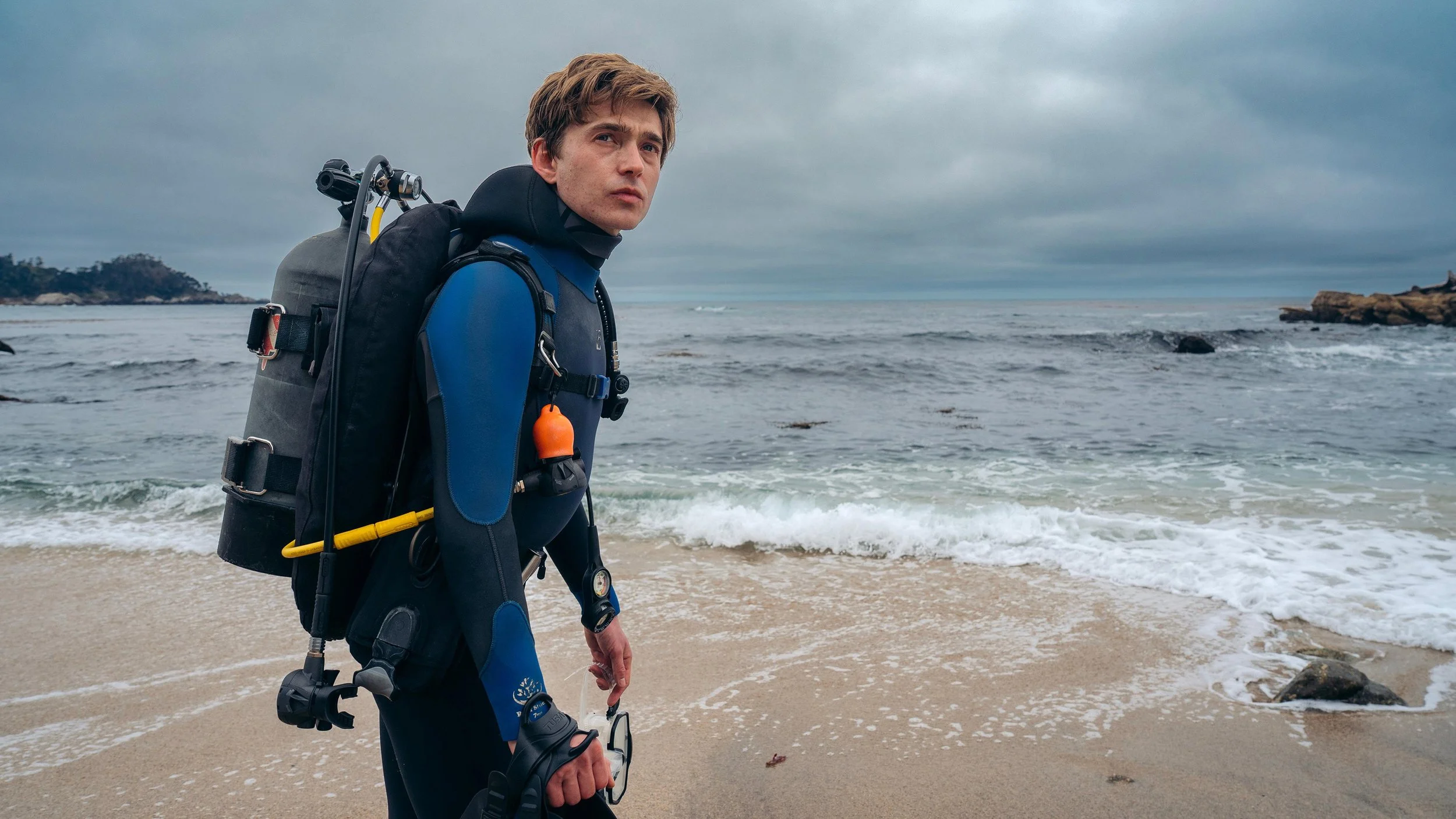
On the surface, Whalefall might seem like a fairly straightforward survival thriller. Jay ventures into the ocean, hoping to recover his father's remains, only to find himself entangled with a giant squid and eventually swallowed by a sperm whale. However, there's quite a bit more to the story than simply watching someone fight for their life. At its heart, the film explores grief, regret, and the complicated relationship between a father and son, using Jay's terrifying predicament to force him to confront the unresolved feelings he's been carrying since his father's death.
For the most part, Whalefall is essentially a one-man show, with Jay spending much of the film trapped inside the whale, desperately trying to find a way out. It's during these moments that we learn more about his complicated relationship with his father through a series of flashbacks, memories, and hallucinations. Mitt wasn't exactly the best father, often taking a strict, demanding approach to parenting and pressuring Jay to follow in his footsteps. And I think there's something quite relatable about that, because living up to a parent's expectations can be difficult enough, especially when the life they've envisioned for you isn't necessarily the one you want for yourself.
And I think that's partly why I struggled to connect with Jay's decision to search for his father's remains. After spending so much of his life dealing with Mitt's expectations and eventually deciding to distance himself from him, I found it difficult to understand why he would willingly put himself at such risk. However, I also recognise that grief and regret can make people do things they wouldn't normally consider. Perhaps Jay's journey was less about finding his father and more about finding some sense of closure for himself. It's an interesting aspect of the film's emotional storytelling, and while I didn't entirely connect with his decision, it did make me reflect on how differently people deal with loss, forgiveness, and the things left unsaid.
Where Whalefall really shines, however, is in its suspense and ability to make you feel just how terrifying Jay's situation is. Being trapped inside the stomach of a whale is a horrifying thought on its own, but the film does a great job of making that environment feel incredibly claustrophobic. With limited space, dwindling resources and seemingly no way out, there's a constant sense of urgency as Jay desperately tries to survive. That said, the film does occasionally push the boundaries of believability, particularly towards the final act. Obviously, you have to suspend your disbelief from the moment Jay gets swallowed by a whale, but some of the later developments begin to feel a little ridiculous, making it difficult to take certain moments as seriously as the filmmakers might have intended.
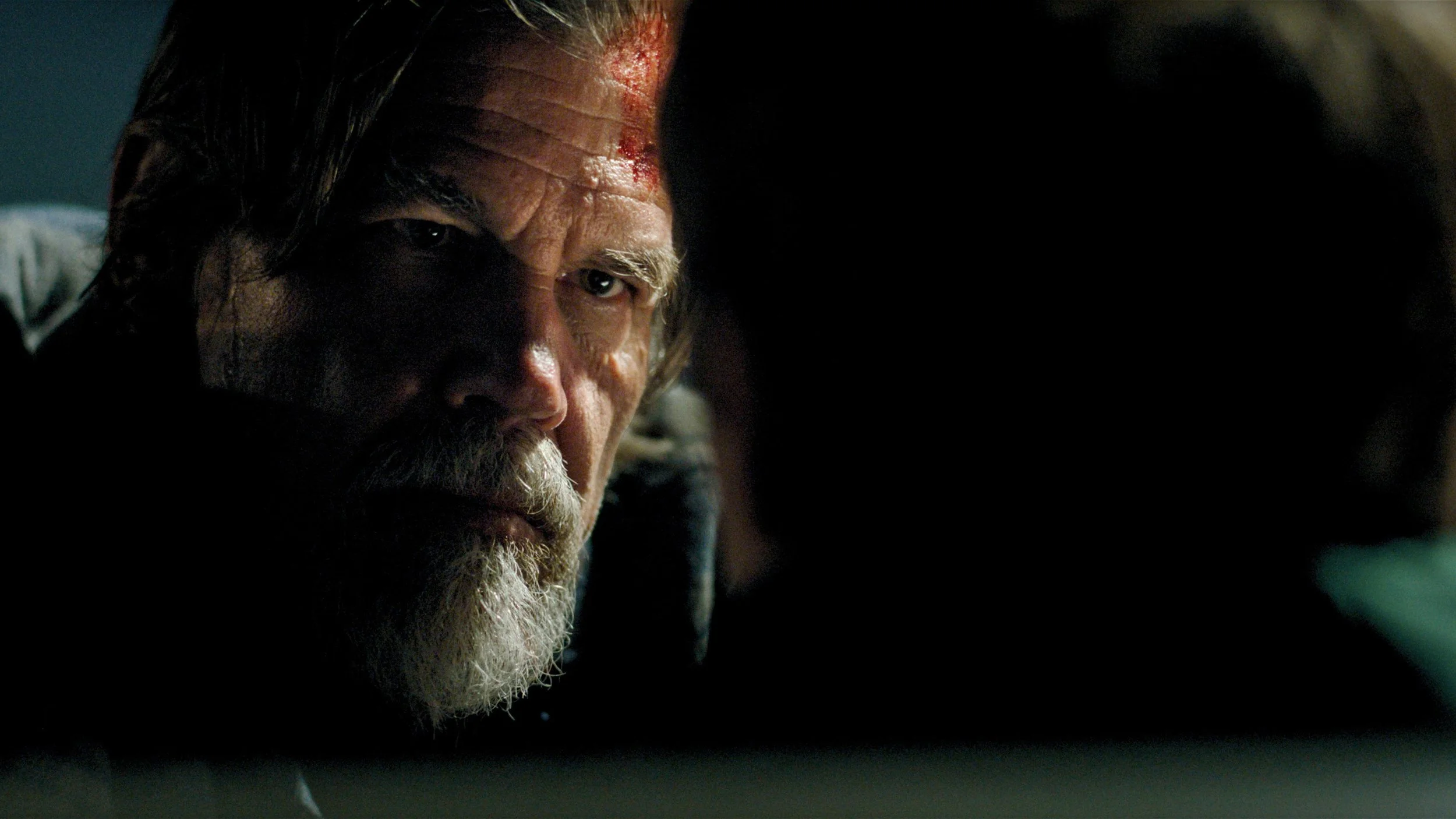
I can’t end the review without discussing the performances. Austin Abrams deserves plenty of credit for his performance, especially considering how much of the film rests on his shoulders. He does a great job conveying Jay's fear, desperation, and determination, while Josh Brolin brings a stern and intimidating presence to Mitt. I also appreciated how the film moves between Jay's struggle for survival and moments from his past, although these shifts occasionally slow the momentum. Still, both actors do a convincing job of bringing the complicated father-son relationship to life.
Overall, I had a good time with Whalefall. It's an entertaining survival thriller that makes great use of its unusual setting, delivering plenty of suspense while exploring some meaningful themes surrounding grief, family, and regret. While I didn't fully connect with every aspect of its emotional storytelling, and some of the later developments became a little too ridiculous for my liking, there's still quite a lot to enjoy here. It's certainly an interesting premise for a film, and I think Brian Duffield deserves credit for turning something so bizarre into a surprisingly engaging experience.